
Download Our App
Shop your way




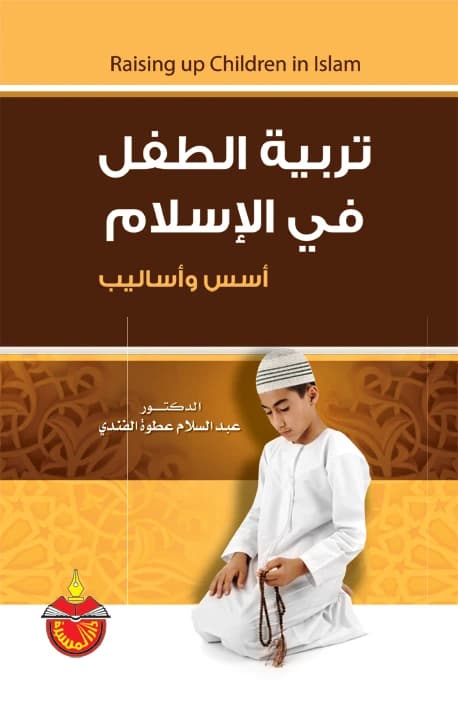
Child Rearing in Islam - Principles and Methods - Dr. Abd al-Salam Atwa al-Findi
JOD

Get it by 5 Aug | Order in 5 Hours 10 Minutes
- Return Policy
- Warranty Policy
- Shipping Policy
- Non contact delivery
- Personal Receipt
- Return Policy
- Warranty Policy
- Shipping Policy
- Non contact delivery
- Personal Receipt
Imam al-Bukhari, may Allah have mercy on him, narrated that the Messenger of Allah, peace and blessings be upon him, said: "Every child is born on the Fitra (natural disposition), and it is his parents who make him a Jew, a Christian, or a Magian, just as an animal gives birth to a whole animal. Do you see any part of it mutilated?" This noble hadith indicates that every newborn is originally upon the true religion, which is the monotheistic religion of Islam. This was mentioned by the early generations and is the consensus of scholars of interpretation. Allah, the Blessed and Exalted, created all His servants as Haneefs (monotheists), but the devils diverted them from their religion. The Fitra necessitates accepting and following the truth, and knowing and loving Islam.
Hence, this great religion—through the verses of the Wise Remembrance and the hadiths of the noble Prophet, upon him be the best of prayers and peace—has obligated parents and educators to guide children towards the paths of truth, goodness, and righteousness. It requires them to teach what benefits them in this life and the hereafter, and advises them to seize the sensitive period of their lives when the fundamental features of their personality are formed: their childhood. During this stage, the human soul is flexible, receptive to everything, and influenced by every effect, like a blank white page, free of any inscription or image, yet upon a sound nature and pure innocence. In a noble prophetic hadith, the Messenger of Allah, peace and blessings be upon him, said: "Teach the child to pray when he is seven years old, and discipline him for it when he is ten."
Therefore, it is our duty to work on raising children with a righteous upbringing and proper nurturing. This is achieved through a good connection with their Lord, may His glory be exalted, instilling the meanings of piety and virtue in their souls and spirits, and guiding them with admonition and advice until goodness becomes their nature and a genuine hallmark of their personality. Consequently, all their intellectual, behavioral, moral, social, and even psychological and emotional aspects are straightened.
The scholars of this Ummah—both early and late—spared no effort in doing all they could in educational matters, through writing, teaching, and other means, to produce a divine, Quranic generation that works to consecrate the religion in its life and reality. However, weakness and shortcoming are part of human nature. Therefore, I wanted to write in this field, benefiting from the experiences of those who came before me, and rectifying some things that some of them missed, especially with the development of curricula and the establishment of modern plans for college and university students in various countries. In this book, I have followed the approved curriculum for the subject "Child Rearing in Islam," prepared by Al-Balqa Applied University for comprehensive college students. I have exerted—praise and grace be to Allah—every effort and seriousness in research, investigation, analysis, scrutiny, collection, and preparation for most aspects of Islamic education, supporting this research with legal texts from Quranic verses, prophetic hadiths, the lives of the righteous predecessors, and the opinions of thinkers and educators with expertise and specialization from the early Muslims who enriched our knowledge and provided us with a great deal of diverse sciences and knowledge. May Allah reward them with the best of rewards on our behalf.
- Number of Pages: 376
- Year of Publication: 2015
- Binding Type: Cardboard
- Edition: 2
- Printing Color: Black
- Size (cm): 17x24
- Weight (kg): 0.750
- Barcode: 9789957069360







