
Download Our App
Shop your way




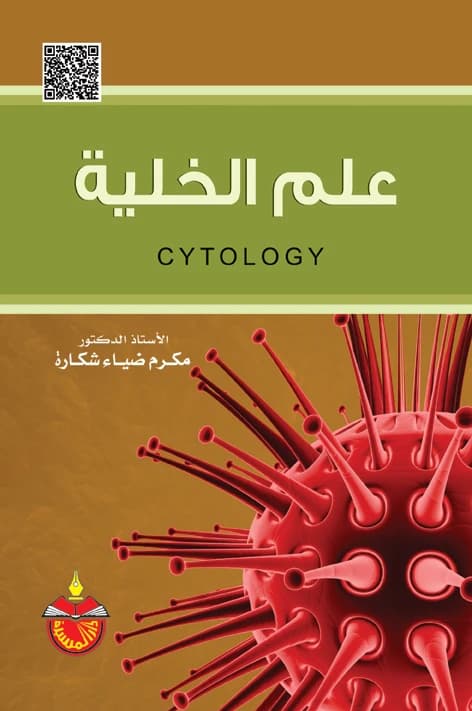
Cell Biology - Makram Dia Shukara (2015)
JOD

Get it by 5 Aug | Order in 5 Hours 7 Minutes
- Return Policy
- Warranty Policy
- Shipping Policy
- Non contact delivery
- Personal Receipt
- Return Policy
- Warranty Policy
- Shipping Policy
- Non contact delivery
- Personal Receipt
Biology is a science that deals with the facts of human formation and continuity in a constantly renewing manner with the persistence of life in all its details. Therefore, science is not just a collection of information, as many believe, but a set of theories, some of which have been proven, while many others await validation. This gives those working in the field a true certainty that they are small soldiers in the struggle for truth and knowledge. Studies in this science have been distributed among multiple branches due to its breadth and the diversity of its fields (despite some overlap). Undoubtedly, the most fundamental are the two branches specializing in the study of cell biology and genetics, which are considered the basis and gateway to the study of life sciences.
In the field of cell biology, the finest structures of the living cell have been discovered through biochemical and physiological research, confirmed by electron microscopes. These structures have been isolated, purified, and their properties studied, in addition to the tremendous progress in animal and plant tissue culture. The main challenge in writing this book on cell biology was trying to keep up with the latest research and specialized scientific references in this field, which made rewriting and revising some chapters of this book inevitable, especially after new information emerged, as cell biology is in a state of continuous growth.
This book was written to be a source for cell biology in colleges and institutes interested in the subject. It is divided into eleven chapters. The first is an introduction to cell biology, including a historical overview of its emergence, its relationship with other sciences, and an idea of cell theory and the origin of life or protoplasm. The second chapter discusses the methods used in separating and analyzing cell components. The third chapter is dedicated to microscopy, covering light microscopes, their types, and all related preparation, visualization, and staining techniques. In the fourth chapter, we learn about the chemical components of the cell, including water, salt ions, gases, and organic compounds. The fifth chapter specializes in cell organization, the sixth studies the plasma membrane, and the seventh deals with the cell wall and vacuoles. The eighth chapter details cell organelles, while the ninth chapter studies the system of microfilaments (cytoskeleton). The topic of the nucleus is addressed in terms of organization and division in the tenth chapter. Finally, the eleventh chapter covers the topic of cell senescence and immortality. We have supported these studies with diagrams, tables, and sources for each chapter to ensure they are comprehensive and serve the intended purpose.
- Number of Pages: 294
- Year of Publication: 2015
- Binding: Hardcover
- Edition: 7
- Printing Color: Black
- Dimensions (cm): 17x24
- Weight (kg): 0.600
- Barcode: 9789957060220







