
Download Our App
Shop your way




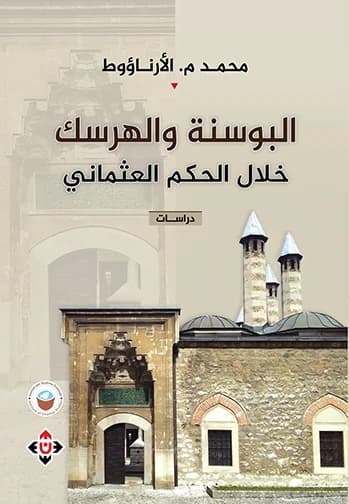
Bosnia and Herzegovina During Ottoman Rule - Dr. Mohammed M. Al-Arnaut
JOD

Get it by 5 Aug | Order in 3 Hours 5 Minutes
- Return Policy
- Warranty Policy
- Shipping Policy
- Non contact delivery
- Personal Receipt
- Return Policy
- Warranty Policy
- Shipping Policy
- Non contact delivery
- Personal Receipt
This book, which combines studies published in academic journals and reviews of books issued in Bosnian, presents an integrated approach to the meaning of “Bosnia,” which became distinguished by many characteristics as a result of the long Ottoman rule. Sarajevo was merely a village when the Ottomans arrived in the heart of Bosnia (1450 AD), and it transformed into a town thanks to the first endowment established by the Ottoman governor Isa-Beg, which was fully documented in 1462 AD, coinciding with the completion of the Ottoman conquest of Bosnia. Besides Isa-Beg, who is referred to as the “founder of Sarajevo” for the endowment he established, Sarajevo is commonly associated with the governor Gazi Husrev-beg, who established massive endowments that ushered Sarajevo into its “Golden Age” in the sixteenth century. His spirit remains present in the old city through the structures he built, which still testify to that era, most notably the Gazi Husrev-beg Mosque, Gazi Husrev-beg Madrasa, and Gazi Husrev-beg Library. However, the “Golden Age” is not limited to the establishments in Sarajevo but extends to encompass the spirit of coexistence that united its Muslim, Christian, and Jewish inhabitants, leading this city to be known as the “European Jerusalem.”
- Author: Dr. Mohammed M. Al-Arnaut
- Publisher: Alaan Publishers and Distributors
- Year of Publication: 2019
- Edition: 1st
- Number of Pages: 294
- Dimensions (cm): 17 × 24
- Weight (g): 460
- ISBN: 978-9923-13-106-0







