
Download Our App
Shop your way




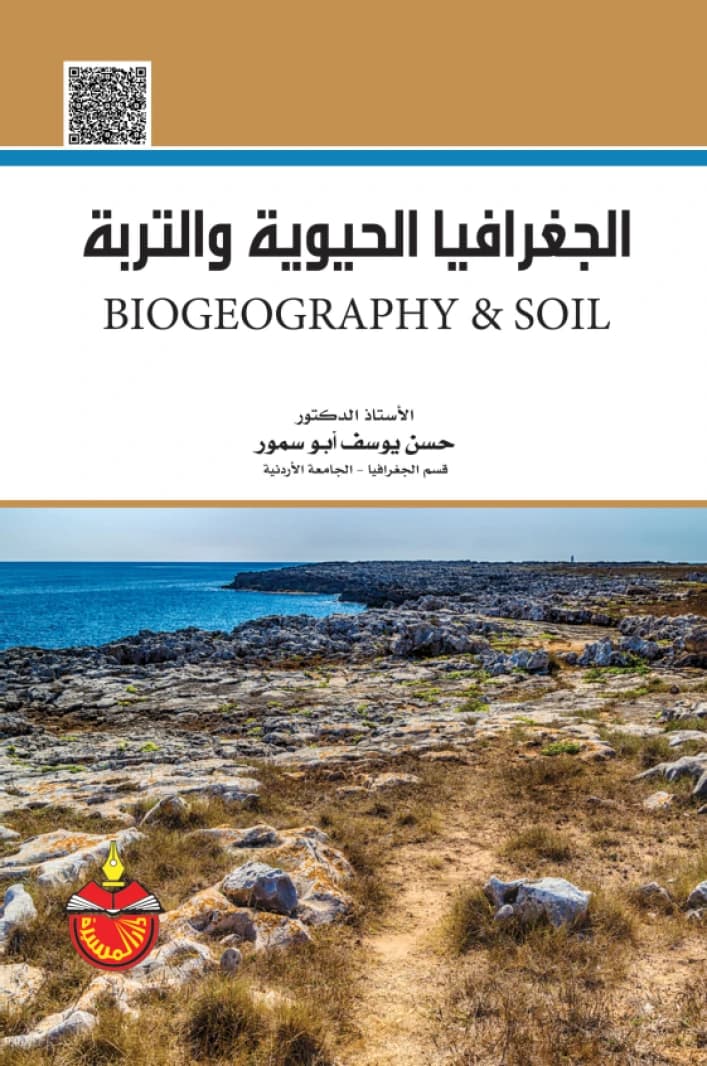
Biogeography and Soil - Hassan Yousef Abu Samour
JOD

Get it by 5 Aug | Order in 5 Hours 7 Minutes
- Return Policy
- Warranty Policy
- Shipping Policy
- Non contact delivery
- Personal Receipt
- Return Policy
- Warranty Policy
- Shipping Policy
- Non contact delivery
- Personal Receipt
Arid regions occupy about a third of the Earth's land area, yet they are home to only 15% of the world's population. Most inhabitants have managed to utilize their local ecosystems, which vary in their extreme dry climatic conditions, water scarcity, or soil poverty. These regions encompass a wide economic, cultural, and social diversity, ranging from optimal or maximum exploitation of natural resources—such as minerals, energy resources, groundwater, and alluvial soils—that supply local and international markets and achieve a high gross domestic product, as is the case in Australia, the United States, the oil-rich Arab Gulf states, Turkey, and Egypt. Conversely, other peoples live there under environmental determinism, continuously facing the challenges of drought and scarcity of natural and economic resources. They have further contributed to environmental degradation through misuse or overexploitation, trapping them in a cycle of poverty and its subsequent health, social, and security problems, as seen in most desert countries like those of the African Sahel, Afghanistan, and Pakistan.
Drylands capture the interest of the entire international community due to their advantages, most notably their vast area, low population density, and abundance of many natural and economic resources, especially metallic minerals, fossil fuels, and alluvial soils. This is reflected in the wealth of scientific studies and the proliferation of local and international scientific centers related to the conditions and problems of these lands and their populations, alongside political interest from countries outside the arid zones. Nevertheless, these lands are in constant need of new scientific contributions that benefit from renewed scientific advancements from field surveys, laboratory analyses, and sequential aerial and satellite imagery, which are stored in increasingly detailed and comprehensive information databases, including elements of local desert environments.
The subject of drylands has sparked the author's interest throughout his academic, professional, and research journey. He focused his graduate studies, university teaching, and scientific research on the geomorphology and hydrology of these lands, particularly in the American Mojave Desert and the Jordanian Desert. This book is intended to be a compilation of this scientific interest, hopefully constituting a valuable addition to the Arabic geographical library for students, researchers, and enthusiasts.
This book deals with ten main topics covered in ten chapters. Chapter One discusses the importance of drylands and the concepts and causes of drought. Chapter Two explains the climatic conditions and thermal-precipitation advantages, while Chapter Three covers desert landforms and their general geomorphological characteristics. Chapter Four addresses biotic land covers and soil. Chapter Five explains desert water resources, and Chapter Six covers demographic characteristics and population distribution patterns. Chapter Seven deals with the agricultural resources of drylands, Chapter Eight touches on their industrial production, and Chapter Nine presents their most significant environmental problems. The final chapter, Chapter Ten, concludes the book by discussing the current conditions of dry land covers, the problems facing their environmental management and development, and their expected future.
Finally, the author hopes that this book provides scientific material that adds to the knowledge of arid regions—land, resources, and population—enabling the Arab reader to understand their conditions in various locations and revealing the challenges facing their use and the potential available for their development and the people who live in them.
- Number of Pages: 336
- Year of Publication: 2016
- Binding Type: Hardcover
- Edition: 4
- Printing Color: Black
- Size (cm): 17x24
- Weight (kg): 0.650
- Barcode: 9789957062637







