
Download Our App
Shop your way




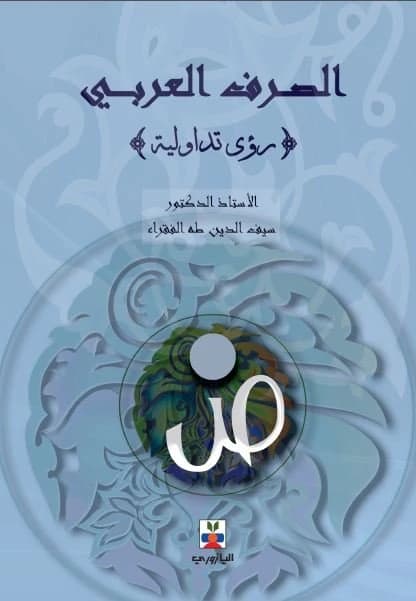
Arabic Morphology: Pragmatic Perspectives
JOD

Get it by 5 Aug | Order in 2 Hours 23 Minutes
- Return Policy
- Warranty Policy
- Shipping Policy
- Non contact delivery
- Personal Receipt
- Return Policy
- Warranty Policy
- Shipping Policy
- Non contact delivery
- Personal Receipt
Linguistic studies in the modern era have witnessed radical transformations in trends, methodologies, and tools. Among these transformations are pragmatic studies, which emerged due to the failures of structuralism, deconstructionism, and previous approaches in developing theories that clarify meaning. Pragmatics has found a fertile ground in modern linguistics and morphological studies, expanding its scope on the map of linguistic research.
This expansion of pragmatic studies requires no proof, given the abundance of pragmatic research and literature that has influenced linguistic inquiry, changing its direction and features. This is because this approach is based on elucidating meaning in linguistic structures in terms of syntax and semantics, after pragmatics was built on the ruins of methods that failed to define the elements of meaning, which is the core of the linguistic process from beginning to end. Pragmatics has surpassed traditional methods that study language for its own sake, viewing language primarily as a system of communication and connection.
New trends emerged at the beginning of the twentieth century with the scientific progress the world witnessed, where a realistic analytical tendency dominated metaphysical trends among contemporary thinkers. Modern analytical philosophy has extended to research in language, and the term 'analysis' has deep roots in history, dating back to Greek philosophy. However, in the modern era, it has become a scientific method in philosophical research, thanks to scholars who presented modern and advanced concepts, overcoming inherited ideas and proposing new ways in philosophical inquiry.
Pragmatics focuses on two aspects: use and interaction, which lead to meaning and methods of understanding it. It constitutes the stage of communication and interaction between interlocutors through the text, which is the language. These are the foundations of modern linguistic studies: syntax, semantics, communication, and interaction. This was stated by Francis Jacques, who believes that “pragmatics addresses language as a discursive, communicative, and social phenomenon combined.”
Sound is the first and smallest unit in linguistic formation. These sounds must combine into words, which are the structures that carry meanings. Then, words combine into sentences and structures to convey meaning between the two poles of the linguistic process: the sender and the receiver. These structures are governed by rules, controls, and standards, and their understanding or judgment is based on grammatical linguistic elements and other factors that determine the path of meaning, such as context, situation, intentionality, and the culture of the producer and receiver, as well as non-linguistic cultural dimensions, all of which contribute to understanding the meaning. These issues have been the focus, field, and tools of pragmatics as it invades contemporary linguistic thought.
- Author: Saif al-Din Taha al-Fuqara
- Publisher: Dar Al-Yazouri for Publishing & Distribution
- Weight: 0.6 kg
- Dimensions: 17 × 27 cm
- ISBN: 978-9957-12-990-3







