
Download Our App
Shop your way




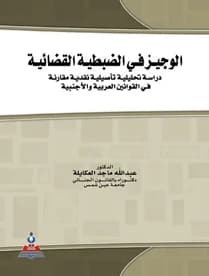
Al-Wajeez on Judicial Police Powers - An Analytical, Foundational, Critical, and Comparative Study in Arab and Foreign Laws by Dr. Abdullah Majed Al-Akayleh
JOD

Get it by 5 Aug | Order in 3 Hours 12 Minutes
- Return Policy
- Warranty Policy
- Shipping Policy
- Non contact delivery
- Personal Receipt
- Return Policy
- Warranty Policy
- Shipping Policy
- Non contact delivery
- Personal Receipt
There is no doubt that personal freedom is a natural human right; indeed, it is the most sacred and precious of all rights, which one cherishes as much as life itself. It is defended with all might because it is the foundation of life and existence. History records that the revolutions of peoples throughout the ages had freedom as their demand and goal. The nations of the world realized its importance and sought a universal declaration affirming human rights and freedoms, ensuring their constitutions included provisions that protect liberties and safeguard rights.
The Universal Declaration of Human Rights was issued on December 10, 1948, affirming the peoples' faith in fundamental human rights, freedoms, and human dignity and worth. Article Three of the declaration states that "Everyone has the right to life, liberty and security of person," and it also provides that "Everyone has the right to freedom of movement... freedom of thought, conscience... and freedom of opinion and expression."
The necessities of life in societies have required that an individual's freedom not be absolute, without controls or restrictions, to prevent clashes with the rights and freedoms of others, which could lead to escalating conflicts and widespread chaos. It was therefore necessary to establish regulations that organize the exercise of individual freedoms and rights in a way that does not infringe upon the rights of others and that ensures a safe, secure, and stable society.
The legal system undertakes the task of setting these regulations, represented by certain limitations on individual freedom for the greater good of society. The law is what ensures a balance between the individual's interest in protecting their freedom and rights and the community's interest in protecting its security and stability. This coordination may sometimes require infringing upon an individual's personal freedom, rights, or privacies, in the form of arrest, search (of a person or residence), or pre-trial detention (custody), which constitutes a violation of their rights. In such cases, the individual is in greatest need of protection. The legislator's task is to establish safeguards to ensure that any infringement on an individual's rights and privacies is kept to a minimum and is only what is necessary to achieve the public interest in uncovering the truth of a crime and identifying its perpetrator.
While the protection of human rights and freedoms is mandatory at all stages of criminal proceedings, it is most imperative in the pre-trial phase. This is the initial stage of criminal procedures, initiated following the occurrence, discovery, or reporting of a crime. It is during this stage that the narrative of the criminal event is constructed and its image is formed, making it difficult to overcome its influence at the trial stage. This initial phase is called the "evidence-gathering stage."
- ISBN: 9789957163648
- Weight: 1.100 kg
- Dimensions: 17×24 cm
- Paper: White
- Pages: 656
- Year of Publication: 2010
- Binding: Hardcover







