
Download Our App
Shop your way




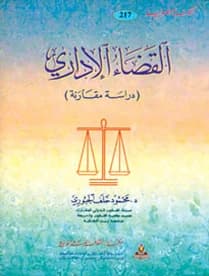
Administrative Judiciary - A Comparative Study by Dr. Mahmoud Khalaf Al-Jubouri
JOD

Get it by 5 Aug | Order in 5 Hours 17 Minutes
- Return Policy
- Warranty Policy
- Shipping Policy
- Non contact delivery
- Personal Receipt
- Return Policy
- Warranty Policy
- Shipping Policy
- Non contact delivery
- Personal Receipt
This book's introductory chapter discusses the emergence and development of the judiciary in the Islamic state. During the time of the Prophet Muhammad (PBUH) and the Rightly Guided Caliphs, the judiciary was unified, as they adjudicated disputes. The Prophet (PBUH) was the first to redress grievances in Islam in the case of Khalid ibn al-Walid with the Bani Khudayjah. However, as the state expanded, traditions and characters of people differed, and religious deterrence weakened, the need arose for a specialized judiciary to look into grievances filed by individuals against governors, tax collectors, and scribes of the diwans if they strayed from the path of righteousness. Abd al-Malik ibn Marwan is considered the first to designate a day for grievances, a practice later followed by the Abbasids. The book then lists the jurisdictions of the Diwan al-Mazalim (Board of Grievances) and refers to the administrative judiciary in France and Jordan. In the first chapter, it explains the manifestations of a state of law, which means the integration of its legal system in terms of legislation and the bodies that implement or apply legal provisions. The elements of a state of law include the existence of a constitution, separation of powers, a hierarchy of legal rules, judicial oversight of the administration's actions, and an elected government. The third chapter lists the entities that hold the administrative judicial function in Jordan, which are the High Court of Justice and disciplinary councils, explaining their formations and jurisdictions. It then points to the restrictions on the principle of legality, as the requirements of administrative work and its timing may proceed without review, and some highly important issues may be exempt from judicial oversight, which are known as acts of sovereignty.
- ISBN: 9789957160000
- Weight: 0.300 kg
- Dimensions: 17×24 cm
- Paper: White
- Pages: 190
- Year of Publication: 1998
- Cover Type: Paperback







