
Download Our App
Shop your way




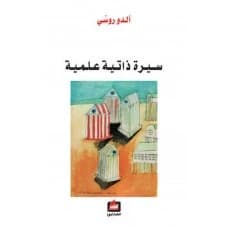
A Scientific Autobiography - Aldo Rossi
JOD

Get it by 5 Aug | Order in 5 Hours 21 Minutes
- Return Policy
- Warranty Policy
- Shipping Policy
- Non contact delivery
- Personal Receipt
- Return Policy
- Warranty Policy
- Shipping Policy
- Non contact delivery
- Personal Receipt
Aldo Rossi (1931-1997) is considered one of the most important architects in Europe and the world. He played a significant role in the development of the architectural movement known as the "New Rationalism" in Italy during the 1960s and 1970s. In addition to his numerous activities and projects in architecture, Rossi taught at some of the world's most prestigious architectural schools, including Milan, Zurich, Venice, Harvard, and Cranbrook. He received several awards, including the Pritzker Architecture Prize in 1990, the American Institute of Architects Gold Medal in 1991, and the Jefferson Memorial Foundation Medal in Architecture in 1992. Rossi left behind a large body of architectural work, ranging from private houses to social housing projects in Italy and Germany, and projects for governmental and cultural buildings, most notably the Carlo Felice Theatre in Genoa, the Teatro del Mondo in Venice, Carlo Cattaneo University, the Bonnefanten Museum in Maastricht, and the Schützenstrasse residential complex in Berlin. Rossi also participated in numerous architectural competitions and projects, including the project for the Palazzo del Cinema in Venice and the project for the German Historical Museum in Berlin. He left a vast collection of drawings and paintings to which he attached great importance in his architectural activity. His publications include "The Architecture of the City" (1966) and "A Scientific Autobiography" (1981), in addition to many articles on historical and contemporary architecture.
- Publishing House: Dar Al-Farabi for Publishing and Distribution
- Number of Pages: 176
- Year of Publication: 2010
- ISBN: 9789953716176
- Cover Type: Paperback







