App Logo

Download Our App

Shop your way

logologo
Image

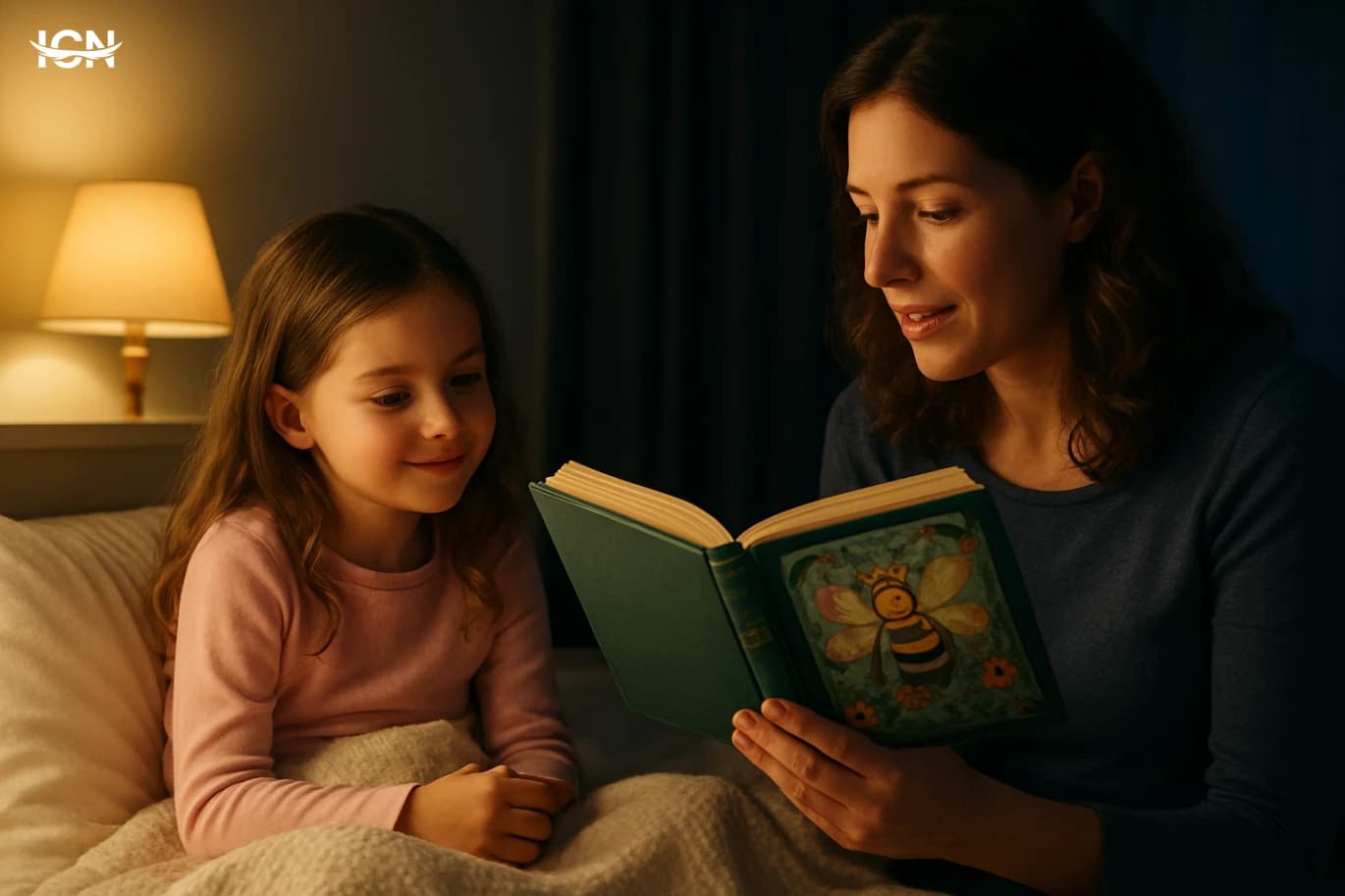
The Queen Bee Garden Bedtime Tale
02/02/2026By: ICN Writer
The Queen Bee Garden Bedtime Tale

A Garden That Wakes at Dusk

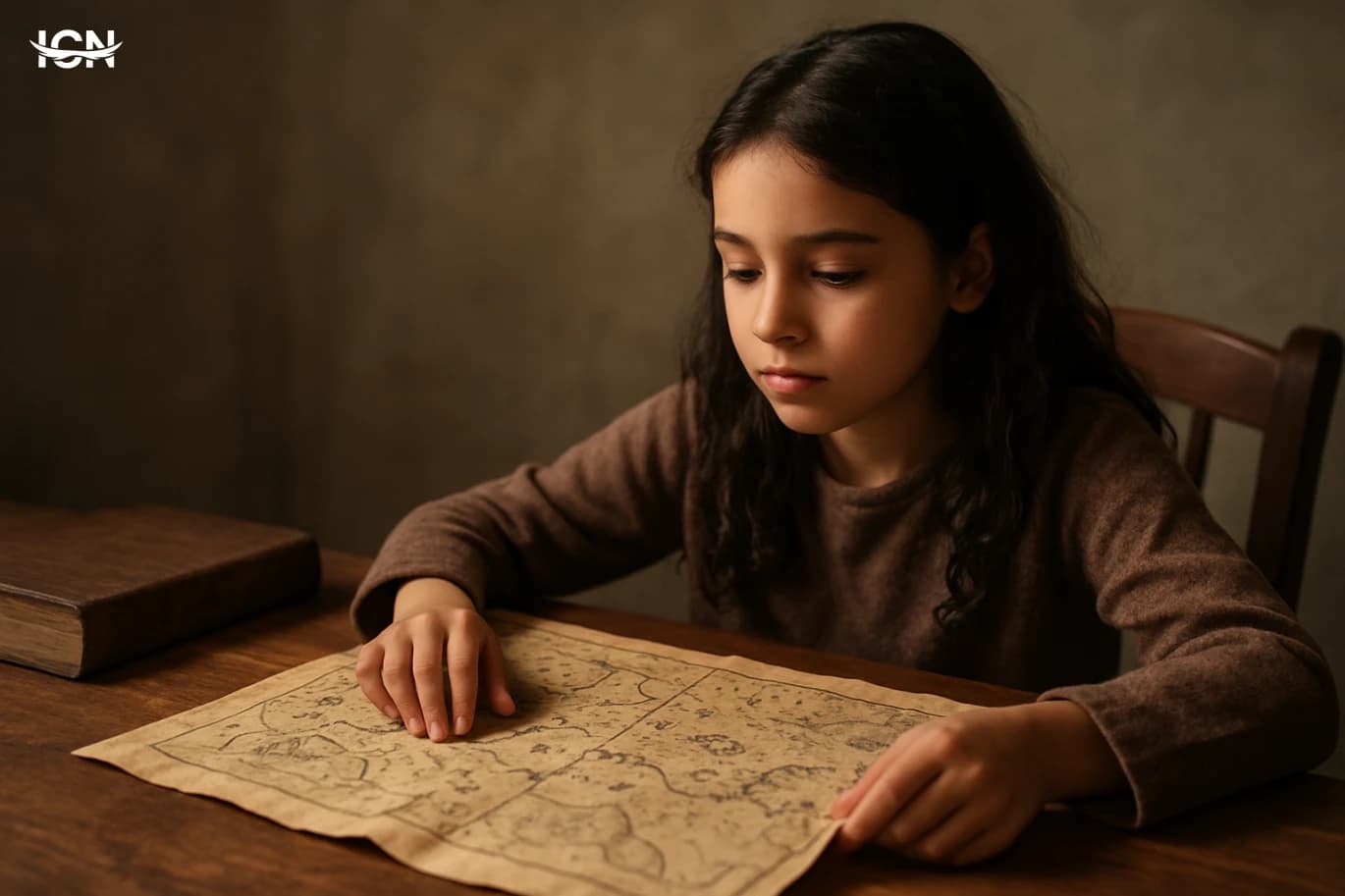
On the edge of a small village, there was a garden children passed every day on their way home. It looked ordinary in the afternoon: a low stone wall, a wooden gate, and rows of flowers that leaned toward the sun. But at dusk, when the air cooled and the shadows stretched, the garden changed in a way only patient eyes could notice. The petals opened wider, the leaves stopped trembling, and a soft humming began, as if the garden was taking a deep breath. Lina, a child who loved quiet places, noticed the change first. She had learned to walk slowly, to listen for small sounds, and to watch how insects moved from one plant to another. One evening, she stood by the gate and counted the bees returning to their hive. They flew in neat lines, not rushing, as if they were following a rule. Lina also noticed something else: a narrow path of tiny white stones that she had never seen before, leading from the gate into the heart of the garden. She did not push the gate right away. She waited, because she knew gardens had their own timing. When the humming grew steadier, she stepped inside. The air smelled of mint and orange blossoms. The flowers were arranged in circles, and in the center stood a tall rosemary bush shaped like a small tower. Lina understood she had entered a place that belonged to the bees, and she promised herself to be careful, quiet, and respectful.

Meeting the Queen Bee

Lina followed the white-stone path until she reached the rosemary tower. The humming was louder there, but it did not feel threatening. It sounded organized, like many tiny wings working together. Behind the rosemary, she found a wide wooden box with a small opening. Bees moved in and out, carrying yellow and orange pollen on their legs. A gentle voice came from the other side of the box. “If you are here to watch, you may stay. If you are here to disturb, you should leave.” Lina looked around, surprised, and then she saw her: the Queen Bee. She was not giant or magical in a frightening way. She looked like a queen because the other bees gave her space, and because she moved calmly, as if she knew exactly where to go. The Queen Bee explained the rules of the garden in simple terms. “We do not waste time. We do not take more than we need. We keep the flowers healthy, and the flowers feed us. This is our agreement.” Lina nodded. She had heard adults speak about agreements, but she had never seen one working so smoothly. The Queen Bee asked Lina to sit on a flat stone near the mint patch. “You can learn by watching,” she said. Lina sat, hands on her knees, and watched bees land, collect nectar, brush pollen, and return. The Queen Bee pointed to different plants: lavender for calm scent, thyme for strong flavor, and orange blossoms for sweet nectar. Lina realized the garden was not just pretty; it was planned like a small town with jobs, routes, and responsibilities.

The Night Task for Lina

After Lina watched for a while, the Queen Bee gave her a small task. “Tonight, the wind will be stronger,” she said. “Some flowers will bend and spill pollen before the morning. We need the garden to stay ready for the next day.” The Queen Bee did not ask Lina to touch the bees or the hive. Instead, she asked her to help the plants. Lina was told to check three areas: the sunflower row near the wall, the basil pots by the path, and the orange blossom tree at the corner. The job was simple but important. She had to tie loose stems to thin wooden sticks, place small stones around pots so they would not tip, and close the gate properly so stray animals would not enter. Lina moved carefully, using a piece of soft cloth she carried in her pocket. She tied stems without pulling too hard. She placed stones in a circle, making sure water could still reach the soil. She listened for the wind and watched how leaves responded. The Queen Bee and a few worker bees followed at a distance, not interfering, only observing. When Lina finished, the garden looked the same as before, but it felt steadier. The Queen Bee approved. “Good work is often invisible,” she said. “But the morning will show it.” Lina felt proud, not because she had done something big, but because she had done something correct. She understood that caring for a place meant noticing small problems before they became large ones.

What the Bees Teach

Before Lina left, the Queen Bee shared three lessons that fit a child’s world. The first was about teamwork. “No bee can keep the garden alive alone,” she said. “One collects nectar, one guards the entrance, one cleans the hive. We succeed because we share the work.” Lina thought about her classroom, where some children carried books, others cleaned the board, and others helped younger students. The second lesson was about patience. The Queen Bee pointed to a bud that had not opened yet. “We do not force it,” she said. “We return tomorrow.” Lina remembered times she wanted a seed to grow faster or wanted a day to arrive sooner. She understood that waiting was not doing nothing; it was giving time for the right moment. The third lesson was about kindness without noise. The Queen Bee explained that bees do not brag about pollinating flowers. They simply do it because it keeps the garden and the hive healthy. Lina realized she could help at home in the same way: putting toys back, admitted mistakes, and speaking gently, even when no one was watching. As Lina walked back to the gate, she noticed the garden’s circles of flowers again. They were not only decoration; they were a map for bees to move efficiently. The garden was a place where every detail had a purpose. Lina promised herself to remember these lessons the next day, especially when she felt impatient or when she wanted to do everything alone.

bookmark

At the gate, the Queen Bee gave Lina a simple way to return without getting lost. “If you want to visit again,” she said, “come at the same time, when the sky turns from orange to blue. Tap the wooden gate twice, then wait. If the garden is ready, you will hear the steady hum.” Lina repeated the steps quietly so she would remember. The Queen Bee also gave Lina a practical gift: a small packet of seeds, labeled in neat writing. “Plant these near your window,” she said. “Choose a pot with holes at the bottom, water a little, and place it where it gets morning light.” Lina recognized the seeds as basil and lavender, plants she had seen in the garden. Lina thanked the Queen Bee and promised to keep the gift safe. She closed the gate carefully, making sure the latch caught. As she walked home, she noticed how the night air carried different smells from different yards: soap from a laundry line, bread from a kitchen, and dust from the road. She felt calmer, as if the garden had taught her how to notice the world without rushing. That night, Lina prepared for bed, placed the seed packet on her desk, and told herself the story again in her own words. She imagined the bees returning in lines, the rosemary tower in the center, and the quiet rule of taking only what is needed. Her eyes grew heavy, and she fell asleep with a clear plan for the morning: find a pot, add soil, and begin her own small garden, one careful step at a time.


* All articles published on this blog are sourced from various websites and are provided for informational purposes only. They should not be considered as confirmed studies or accurate information. Please verify the information independently before relying on it.

Similar ARTICLES

The Little Forest Keeper: A Bedtime Story
In the heart of the bustling city, where concrete towers rise and the streets are choked with cars, 10-year-old Sami always felt like something was missing. He constantly wondered about the grayness that blanketed his city's sky and why he felt so tired whenever he spent too much time outdoors. The answer came on a school trip to the Rainforest Reserve, a protected natural area on the outskirts of the city, considered the lungs of the region. The trip aimed to teach the students about the importance of ecological balance. Upon arrival, the sight was breathtaking: towering trees reaching for the sky, the fresh air filling their lungs with a refreshing coolness, and the sounds of birdsong filling the air. The environmental expert who had accompanied them on the tour greeted them and began explaining how the forest functions. "Do you feel the difference here?" the expert asked the students. "The air is different here, isn't it? Do you know why?" Sami raised his hand and exclaimed enthusiastically, "Because it's full of trees! Trees create the air!"
Samsoum and the Quiet Map
Samsoum is a small, curious character who lives in a tidy home where evenings are calm and predictable. Tonight, however, Samsoum feels a little restless, the kind of restlessness that makes pillows feel too warm and blankets too light. Instead of forcing sleep, Samsoum decides to do something simple and safe: prepare a “quiet plan” for the night. The plan has three steps—drink a little water, put one toy back on the shelf, and choose a story. This is not about being perfect; it is about giving the mind a clear path to follow. The bedtime story begins with that idea: a gentle routine can turn a busy day into a calm night. Samsoum’s world is not filled with big problems or loud events. It is filled with small choices, familiar objects, and the comfort of knowing what comes next. That is why this story works well before sleep. It keeps the pace slow, uses clear details, and gives children a sense of control. The goal is not excitement; the goal is a soft landing into rest, one step at a time.
The story of the unknown companion before bedtime
"The Unknown Companion" is one of the most famous stories in the Green Library, inspired by world literature. It tells the tale of Amin, a young man who becomes an orphan, sells his possessions, and embarks on a journey. Along the way, he meets a mysterious companion who courageously and wisely helps him overcome perilous adventures, most notably solving the riddles of a princess and marrying her. It is eventually revealed that this companion was the benevolent spirit of his father, who had cared for him. Summary of Events: The story begins with the death of Amin's father when he is sixteen years old, leaving him a final will. The young man decides to sell his house and leave the city to seek his future. On his journey, he meets a stranger who offers to travel with him as friends. The pair embark on wondrous adventures, the most significant of which occurs when they arrive in a kingdom ruled by a highly intelligent princess. She stipulates that marriage is only possible for the one who solves the three riddles she poses, and she executes all who fail. Thanks to the wisdom and unseen assistance of the unknown companion, Amin succeeds in answering the riddles and wins the princess's heart.
The Quiet Power of Unreliable Diaries
Diary-based fiction feels intimate because it borrows the format of private record-keeping, but it also changes how readers judge truth. A diary entry is dated, selective, and written for a specific moment, which means it naturally contains gaps, revisions, and self-justifications. In novels and short stories, that structure lets writers compress time, jump between days or years, and show how a narrator’s priorities shift without needing heavy exposition. It also creates a built-in tension: the reader is invited to trust the “document,” while the story quietly signals that the document is incomplete. This topic becomes especially engaging when the diary is unreliable on purpose. Unreliability is not only about lying; it can come from limited knowledge, emotional bias, memory distortion, or a narrator who edits their own past to protect their self-image. In diary fiction, those mechanisms are easy to dramatize because the narrator is actively choosing what to write down and what to omit. The result is a reading experience where interpretation matters: readers assemble the “real” story from what is written, what is avoided, and what contradicts earlier entries.
Hedgehog Neighbors at Moonlit Meadow
In a small meadow at the edge of a pine grove, the evening routine always began the same way. The sun slipped behind the trees, the air cooled, and the ground held the day’s warmth like a soft blanket. Under a low bush of wild thyme lived Hadi the hedgehog. He was small, careful, and proud of how well he kept his home: a tidy nest of dry leaves, a smooth pebble by the entrance, and a narrow path he cleared with his paws. That night, Hadi stepped outside to check the meadow. He listened for the steady sounds that meant everything was normal: the gentle rustle of grass, the distant hoot of an owl far above, and the quiet tapping of beetles moving under fallen bark. Hadi’s neighbors were all small animals, each with their own habits. Mina the field mouse stored seeds in a hollow log. Sami the rabbit liked to trim clover near the creek. Lina the squirrel kept pinecones in a forked branch. And Nabil the tortoise moved slowly between patches of shade, always arriving later than everyone else. Hadi liked order, and he liked knowing what to expect. But the meadow had a way of offering small surprises, the kind that made an ordinary evening feel like a story worth remembering before sleep.
The Woodcutter and the Lake Warden
In a valley known for its cedar slopes and a single freshwater lake, the community depended on two resources that rarely agreed with each other: timber from the hills and water from the basin. The lake fed irrigation channels, cooled the air in summer, and supplied drinking water to nearby homes. The forest, meanwhile, provided firewood, beams for roofs, and seasonal work for men who knew how to cut without wasting. To reduce disputes, the council appointed a lake warden with clear duties: keep the shoreline clean, prevent dumping, and monitor the small inlet stream that carried silt after storms. The warden, named Salim, was not a soldier and carried no weapon; his authority came from records, schedules, and the trust of farmers who needed stable water levels. He kept a notebook of daily observations, marked the height of the water on a stone gauge, and reported any unusual changes. On the other side of the valley worked a woodcutter named Nabil. He was skilled, careful with his tools, and known for choosing trees that were already leaning or crowded, leaving younger growth to recover. Yet the work was unpredictable. A late frost could ruin a season, and a broken axle on a cart could turn a week’s earnings into debt. Nabil’s problem was not laziness or greed; it was the pressure of providing for his household when the market price for wood dropped. The story begins when the lake’s surface fell faster than usual at the end of spring. Farmers blamed the forest work, saying the hills were being stripped and the soil no longer held water. Woodcutters blamed the farmers, saying irrigation gates were left open and channels leaked. Salim, the warden, had to find facts before the valley turned its arguments into permanent divisions.
The Water Lily’s Quiet Journey
In a small town bordered by farms and a narrow canal, there was a pond that most people passed without noticing. It sat behind a line of reeds and low willow branches, fed by rain and a slow trickle of water from the canal. Children sometimes came to skip stones, and older residents used the path beside it as a shortcut to the market. The pond was not large, but it had a steady rhythm: morning mist, midday glare, and evening insects that stitched thin lines across the surface. One spring, after an unusually wet month, the pond’s edges expanded and the water turned clearer than usual. A local gardener named Salim, who maintained the public flowerbeds near the school, began stopping there on his walks. He was not looking for anything dramatic; he simply liked to observe how plants responded to the season. He noticed that the pond’s surface was mostly open water, with only scattered floating leaves from common aquatic plants. It looked like a place that could support something more structured, something that would bring shade and balance. Salim’s interest was practical. The town had been discussing how to improve the small park nearby without spending much money. A pond that looked cared for could become a modest attraction, and it might also help with summer heat by cooling the immediate area. He took notes on the water depth, the amount of sunlight, and the flow from the canal. He also paid attention to what was already living there: small fish, insects, and a few frogs that appeared at dusk. The pond was a simple ecosystem waiting for a stable anchor. That is when Salim thought of a water lily. Not as a symbol, but as a plant with clear functions: broad leaves that reduce algae growth by shading the water, flowers that attract pollinators, and roots that stabilize sediment. He knew that introducing a species required care, and he decided to do it in a way that respected the pond’s existing life.
How Novels Make Cities Feel Real
In many novels, the city is not just a backdrop; it shapes what characters can do, what they fear, and what they believe is possible. A dense neighborhood can force chance encounters, while a spread-out suburb can isolate people and stretch small conflicts over long distances. Writers use details like transit routes, housing types, and local routines to create pressure on the plot. When a character misses the last train, the city’s schedule becomes a turning point. When a rent increase threatens a family, the housing market becomes a source of tension that feels immediate and concrete. Cities also carry social rules that characters must navigate. A story set in a tourist district will have different expectations, languages, and economic rhythms than one set in an industrial zone. Even the time of day changes the city’s meaning: morning markets, midday offices, late-night streets, and early-morning deliveries each create distinct scenes and risks. By treating the city as an active system—transport, work, leisure, and informal networks—novels can deliver realism without long explanations. Readers sense the logic of the place through what characters can access, avoid, or exploit.
The Old Man of the Village
In a small village surrounded by olive groves and low hills, the day began in the same place it always did: the square beside the water well. Shopkeepers lifted metal shutters, the baker stacked flatbread on a wooden board, and the school bus stopped briefly before turning toward the main road. At the edge of the square, an old man named Salim took his usual seat on a stone bench under a fig tree. He wore a clean wool vest, carried a small cloth bag, and greeted people by name, not with long speeches but with short, precise questions about their work, their harvest, and their families. Salim was not the village leader, and he did not hold any official role. Yet his presence shaped the rhythm of the morning. Farmers paused to ask him about the weather signs he had learned from decades of fieldwork. A young shop owner asked him which supplier had been reliable in past seasons. Even the bus driver, who rarely spoke, nodded to him as if confirming that the village was in order. Salim listened more than he talked, and when he did speak, he offered practical details: when to prune, how to store grain, which path stayed passable after rain. To visitors, he looked like a quiet retiree. To the villagers, he was a living record of routines, mistakes, and solutions. The square was not just a meeting point; it was where information moved, and Salim was one of its steady channels.
Wild Swans at Bedtime
Bedtime stories work best when they slow the pace of the day without losing a child’s attention. “Wild swans” is a theme that naturally supports that goal: it brings in quiet water, steady flight, and a sense of distance that feels safe. In this version, the story is built around a small lakeside town where a family watches seasonal swans arrive and leave. The plot stays simple and clear, with a few repeated images—moonlight on the lake, soft wingbeats, and a familiar path to the shore—so children can follow along even when they are tired. The bedtime angle matters. Instead of a fast adventure, the narrative focuses on observation and routine: preparing warm tea, folding a blanket, and stepping outside for a short walk. These details help listeners settle. The swans become a gentle marker of time, showing that change can be predictable and not frightening. The story also avoids loud conflict; it uses small questions—Where do the swans go? How do they find their way?—to keep curiosity alive while maintaining a calm mood.
By clicking the SUBSCRIBE button, you are agreeing to our Privacy & Cookie Policy If you want to unsubsribe the marketing email, please proceed to our privacy center.
© 2005-2026 ICN. All Rights Reserved.