The Library of Alexandria Between Fact and Legend
- Why the Library Became a Global Symbol
- What We Can Verify About Its Collections
- The Many Stories of Its Destruction
- How the Myth Shaped Modern Culture
- What the Library Teaches About Preservation Today
Why the Library Became a Global Symbol
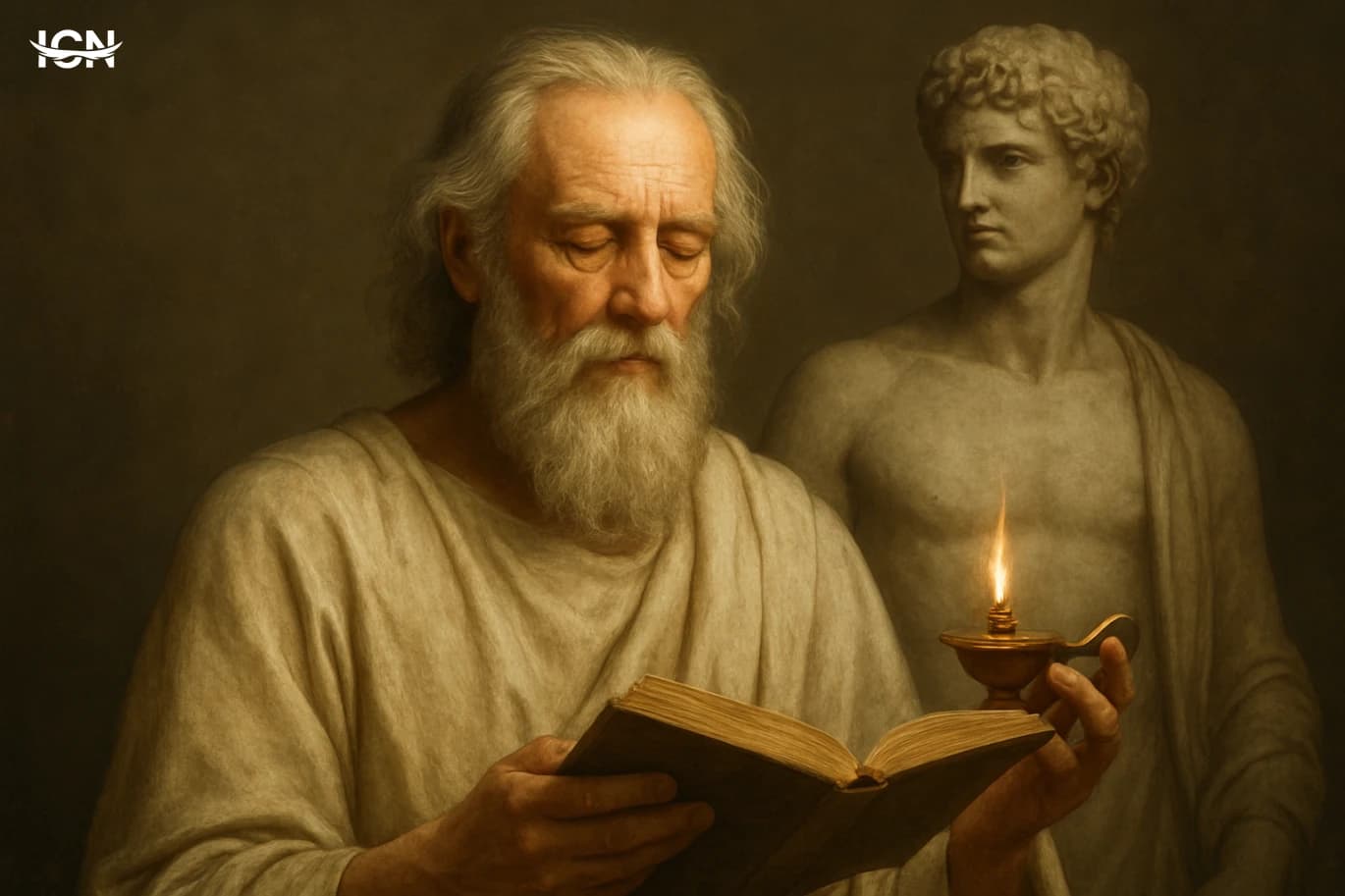
The Library of Alexandria is often treated as a single building that held all ancient knowledge, but the historical reality is more specific and more interesting. What scholars call the “Library” was tied to the Mouseion, a state-supported research institution in Ptolemaic Alexandria that attracted poets, mathematicians, physicians, and philologists. Its fame grew because it represented a new model: knowledge gathered systematically, cataloged, and supported by public funding. That combination made it easy for later writers to use the Library as shorthand for intellectual ambition, cultural prestige, and the fragility of learning. Alexandria itself mattered. Founded as a port city linking the Mediterranean to Egypt’s interior, it became a hub where Greek, Egyptian, Jewish, and other communities interacted. That diversity helped produce a story that travels well across cultures: a place where languages met, texts were compared, and scholarship became an international enterprise. Over time, the Library’s image expanded beyond what any institution could realistically contain, turning it into a symbol of “lost wisdom” even when many ancient works survived elsewhere through copying and translation.
What We Can Verify About Its Collections
Reliable details about the Library’s holdings are limited, but several features are widely accepted. The collection focused on scrolls, and acquisition was an active policy rather than passive accumulation. Ancient accounts describe efforts to obtain texts from across the Greek-speaking world and beyond, including purchasing, copying, and sometimes retaining originals while returning copies. Whether every detail of these stories is accurate, they reflect a real institutional priority: building comprehensive reference collections for scholarship. Equally important is the idea of organization. The Library is associated with early large-scale cataloging, often linked to Callimachus and his Pinakes, a bibliographic work that reportedly arranged authors and works by genre and provided identifying information. Even if the Pinakes did not function like a modern library catalog, it signals that Alexandrian scholarship treated texts as items to be described, compared, and corrected. This is where the Library’s influence becomes concrete: it supported textual criticism, standardized editions, and reference practices that shaped later scholarship. The Library’s collection was not only “literature” in the narrow sense. Alexandria’s scholarly environment included mathematics, astronomy, medicine, geography, and engineering. The point is not that every discipline was equally represented, but that the institution’s prestige rested on the breadth of inquiry and the presence of specialists who could teach, debate, and write. That ecosystem, more than a single number of scrolls, explains why the Library became a benchmark for intellectual life.
The Many Stories of Its Destruction
The most famous legend says the Library was destroyed in a single catastrophic fire that erased ancient knowledge overnight. The historical picture is more fragmented. Different sources connect losses in Alexandria’s book culture to different moments, including conflicts in the city, administrative changes, and the gradual decline of institutions that depended on royal or imperial patronage. Rather than one definitive “end,” it is more plausible that collections were damaged, dispersed, or reduced over time. Part of the confusion comes from the way later writers used the Library as a moral lesson. A dramatic destruction story is memorable and useful: it warns about negligence, celebrates the value of learning, or criticizes rivals. But institutions like the Mouseion were embedded in budgets, politics, and urban life. When funding shrank or priorities shifted, scholars left, copying slowed, and collections became harder to maintain. In that sense, “destruction” can mean administrative collapse as much as physical burning. Another reason the legend persists is that it offers a simple explanation for a complex reality: many ancient works are lost for multiple reasons, including limited copying, changing educational curricula, and the fragility of writing materials. The Library becomes a convenient single cause. A more accurate view treats Alexandria as one major node in a wider network of preservation and loss, where texts moved between cities, languages, and formats over centuries.
How the Myth Shaped Modern Culture
In modern culture, the Library of Alexandria often appears as a warning about the vulnerability of knowledge. Writers, educators, and institutions invoke it when discussing censorship, disasters, or the risks of concentrating information in one place. This symbolic use can be powerful, but it also flattens history by treating the Library as the only repository that mattered. The myth also influences how people imagine ancient scholarship. Alexandria becomes a prototype of the modern university: scholars in residence, state funding, curated collections, and a mission to gather the world’s texts. Some of these parallels are reasonable, but others project contemporary expectations onto a very different society. The result is a romantic image of a research paradise that can obscure the practical realities of ancient education, access, and social hierarchy. At the same time, the Library’s legend has encouraged real investments in libraries and archives by making preservation a public value. The modern Bibliotheca Alexandrina, for example, is often discussed in connection with the ancient institution, not as a direct continuation but as a statement about cultural memory. The key analytical point is that myths can produce tangible outcomes: they shape funding priorities, public interest, and the language used to defend cultural institutions.
What the Library Teaches About Preservation Today
A careful reading of the Library’s history suggests that preservation is less about one heroic building and more about systems. Redundancy matters: multiple copies in multiple places reduce the risk of total loss. In antiquity, copying was labor-intensive and expensive, which meant that many works existed in few copies. Today, digitization can create redundancy at scale, but it introduces new dependencies on formats, storage media, and institutional continuity. The Library also highlights the importance of metadata and organization. Texts that are not described, indexed, and discoverable are effectively invisible, even if they physically survive. Alexandrian cataloging traditions remind us that preservation includes intellectual access: classification, provenance records, and clear versioning. Modern parallels include persistent identifiers, standardized catalog records, and transparent editorial practices. Finally, the story encourages a realistic view of “loss.” Not every missing work vanished in a single event; many disappeared because they stopped being copied and taught. That lesson applies today when digital materials are created without long-term stewardship plans. The practical takeaway is that preservation requires budgets, trained staff, and policies that survive leadership changes. The Library of Alexandria remains relevant not because it was perfect, but because its legend points to the ongoing challenge of keeping knowledge usable across generations.