App Logo

Download Our App

Shop your way

logologo
Image

Pharaohs

06/12/2025By: ICN
Pharaohs

the introduction

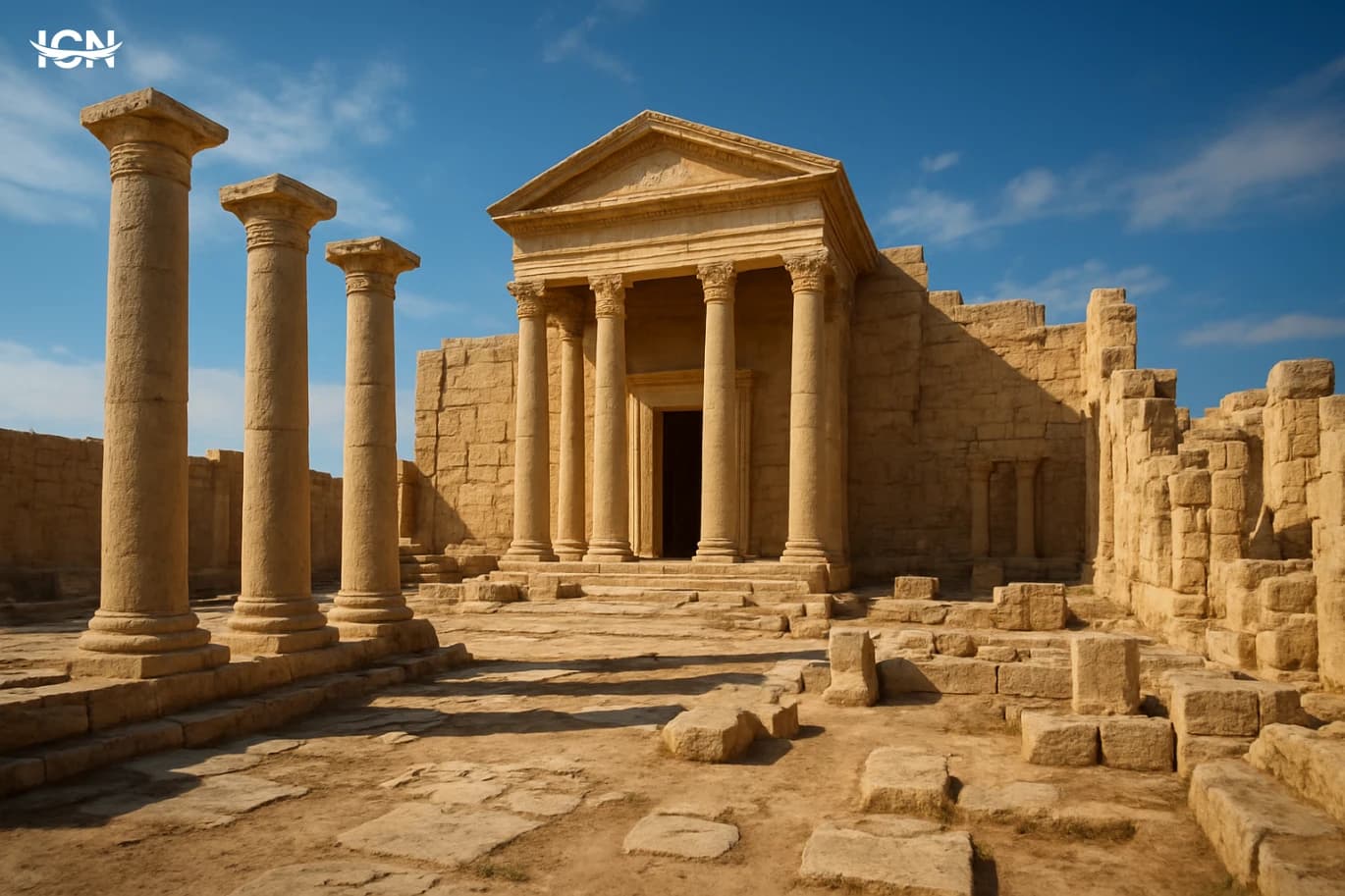
The history of the Pharaohs is considered a civilization of the Pharaohs of ancient civilizations that left a clear imprint in the history of humanity. This civilization started around 3100 BC and lasted for more than three thousand years. Ancient Egypt was home to kings and legends, and has witnessed many achievements in various fields such as engineering, arts and medicine. The Pharaonic civilization and its development developed through the Pharaonic civilization throughout the ages, as it witnessed periods of prosperity and slope. The large pyramids and temples that embody the strength and greatness of the Pharaohs were built. The Pharaohs also concerned with writing and arts, which helped document their cultural and religious history, and that civilization left a legacy that still amazes the world today.

Pyramids and pyramids: the wonders of the ancient world

Building pyramids and their importance The building of the pyramids is a great architectural achievement, as the Pharaohs used advanced technology and dense labor to build these monuments. The pyramids were not mere graves of the kings, but rather an embodiment of the idea of ​​the afterlife and an extension of the power of the Pharaohs, which made it a symbol of ancient Egyptian civilization. The role of the pyramids in the Pharaonic life was the pyramids represented an important axis in the religious and cultural life of the Egyptian ancient people, as they believed that they provide the kings a smooth journey to the other world. It also represented the embodiment of their intellectual and practical creativity, which contributed to a tremendous impact on the world's artistic and architectural history.

Pharaonic civilization and culture

Arts and sciences in the civilization of the Pharaohs were the civilization of the Pharaohs abound in arts and sciences, where they developed the arts of sculpture and drawing, and they were created in architecture. Use natural colors in their paintings to create scenes representing daily life and deities. The ancient Egyptian scientists have made great contributions to areas such as medicine, mathematics, and astronomy, which contributed to the progress of their knowledge significantly. Inheritance and holidays in the life of the Pharaohs were an essential element in the Pharaonic monarchy, so that the children inherited the ruling from their fathers. The holidays also played a prominent role in the lives of the ancient Egyptians, as they celebrated religious and agricultural events, which reflects the value of the collective spirit and belonging to society.

The most important famous pharaohs

Pharaoh Tutankhamun was Tutankhamun, one of the most famous Pharaohs, and he is known for his entirely discovered grave. He took power at an early age, and it is believed that his rule was short, but she was full of achievements. Pharaoh Hatshepsut is Hatshepsut, one of the few women who Toulin Governance in Pharaonic Egypt, and has achieved great successes in trade and construction. I was interested in developing trade relations with neighboring countries, which contributed to raising the level of the Egyptian economy.

Ownership and judgment in ancient Egypt

The system of government and power in the civilization of the Pharaohs was the regime in ancient Egypt, it is absolutely royal, as the Pharaoh was the supreme ruler and possessed full power. The Pharaohs considered the sons of the gods, which gave them great prestige and respect in society. The role of the Pharaohs in economic and social life, the role of the Pharaohs was not limited to political leadership, but also extended to the influence of economic and social life in Egypt. They developed agriculture, construction and trade, which helped the prosperity of ancient Egyptian society and achieve economic stability.
* All articles published on this blog are sourced from various websites and are provided for informational purposes only. They should not be considered as confirmed studies or accurate information. Please verify the information independently before relying on it.

Similar ARTICLES

Human Immortality as a Cultural Project
In everyday speech, “immortality” often sounds like a single promise: living forever. In practice, cultures have treated it as a bundle of different goals. One is bodily continuity, where the same person keeps breathing and aging is halted or reversed. Another is symbolic survival, where a name, a work, or a lineage outlasts the individual. A third is narrative continuity, where a community keeps telling a person’s story until it becomes part of shared memory. These distinctions matter because they shape what societies invest in. When immortality is imagined as bodily continuity, the focus tends to fall on medicine, preservation, and the management of decline. When it is imagined as symbolic survival, the focus shifts to monuments, writing, and institutions that record achievements. When it is imagined as narrative continuity, the focus becomes education, ritual, and the repeated retelling of exemplary lives. A practical way to analyze the philosophy of immortality is to ask two questions: What exactly is supposed to continue, and who has the authority to recognize that continuity? A body can be measured, a name can be archived, and a story can be repeated, but each depends on social systems—records, witnesses, and agreed standards of identity. Immortality, in this sense, is not only a personal aspiration; it is a cultural project that requires infrastructure.
The Mythic Logistics of Ancient Pilgrimage Routes
Pilgrimage routes in antiquity were not only lines on a map; they were systems that had to work every season. When thousands of travelers moved toward a sanctuary, practical questions shaped the journey: where to find water, how to cross a mountain pass, how to enter a city without chaos, and how to pay for food and lodging. Over time, communities explained these practical solutions through memorable stories. A spring became “discovered” by a hero, a safe pass became “opened” by a deity, and a dangerous stretch of road gained a protective spirit. This blend of logistics and myth helped people remember critical information and reinforced the authority of the shrine and its caretakers. Across the Mediterranean and Near East, sanctuaries such as Delphi, Olympia, Eleusis, and major healing centers drew visitors from far away, while in Egypt and Mesopotamia festival calendars also pulled crowds toward specific temples. The repeated movement created predictable corridors of travel. Those corridors encouraged the building of waystations, markets, and rules for conduct. Myths attached to these corridors often served as public explanations for why a route mattered and why certain stops were “necessary.” The result is a topic that sits between history and mythology: the operational reality of moving people at scale, and the narrative tools societies used to manage that reality.
The Many Lives of the Phoenix Legend
The phoenix is often treated as a simple symbol of rebirth, but its history is more specific and more complicated. Ancient writers did not agree on what the bird looked like, where it lived, or how often it appeared. Some accounts describe a bird linked to the sun and to cycles of time; others frame it as a rare creature whose appearance could be used to date an era. Following the phoenix across sources is a practical way to see how myths travel: they pick up local details, lose others, and get repurposed for new audiences. This topic looks at the phoenix as a historical idea, not just a modern motivational emblem. The phoenix also matters because it sits at the intersection of observation, storytelling, and authority. When a respected historian or natural philosopher wrote about it, the story gained weight, even if the evidence was secondhand. Later, artists and compilers treated those texts as references, which helped stabilize certain features of the legend. By tracking who repeated what, and why, we can see how a myth can behave like a “fact” in cultural memory. The phoenix is a case study in how people used the natural world to talk about time, legitimacy, and continuity.
The Hidden Politics of Ancient Oracles
In many ancient societies, an oracle was not simply a spiritual service. It functioned as a public institution that shaped decisions about leadership, law, trade, and settlement. People traveled long distances to consult famous sanctuaries, bringing offerings that supported local economies and reinforced the status of priestly administrators. The answers, often delivered in ambiguous language, could be interpreted in ways that protected the oracle’s authority while still guiding action. Oracles also worked as information hubs. Pilgrims carried news from their regions, and sanctuary staff could learn about alliances, shortages, disputes, and new rulers. That flow of information mattered in a world without mass communication. When an oracle spoke, it could validate a policy already favored by elites, or it could slow down a risky plan by demanding further rituals, delays, or consultations. The result was a system where mythic legitimacy and practical governance were tightly linked, even when the language sounded purely sacred.
How Ancient Maps Invented the World’s Edges
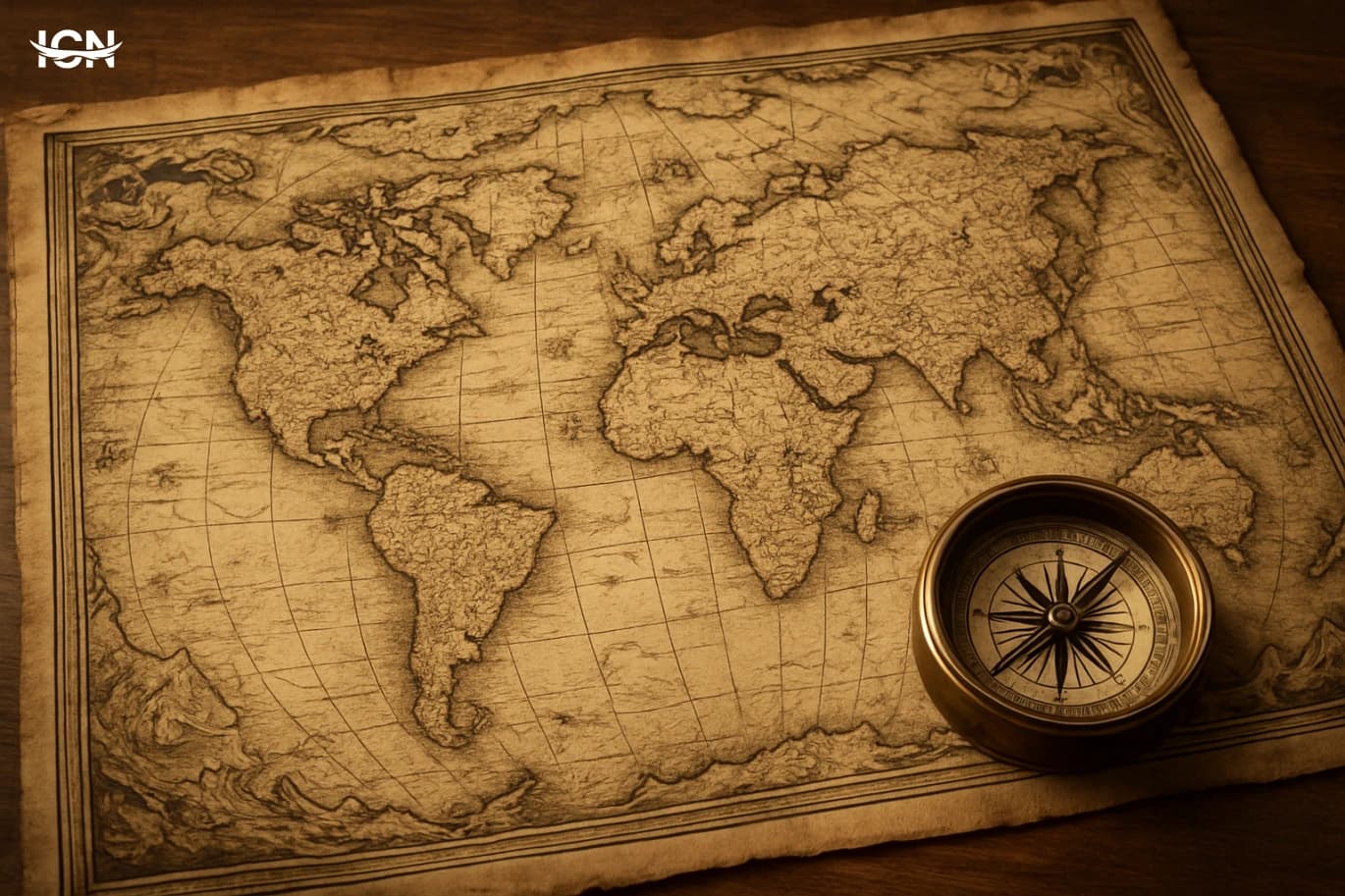
Long before borders were surveyed with instruments, many societies treated the edge of the known world as a narrative space. Early mapmakers were not only recording coastlines and rivers; they were also organizing what a community believed about distance, danger, trade, and the unfamiliar. In practice, this meant that the “end” of a map often marked the end of reliable travel accounts, not the end of land or sea. The blank areas were rarely neutral. They invited labels, warnings, and symbolic markers that helped readers decide what was plausible, what was profitable, and what was off-limits. This topic looks at how ancient and medieval maps blended observation with inherited myth. A port city might be drawn with careful attention because merchants could verify it, while a far-off region might be filled with a note about harsh winds, impassable deserts, or strange creatures. These additions were not random decoration; they were a form of information management. By turning uncertainty into a story, mapmakers made the unknown legible to rulers, sailors, pilgrims, and scholars who needed to plan journeys and justify decisions.
The Real Story Behind the Trojan Horse
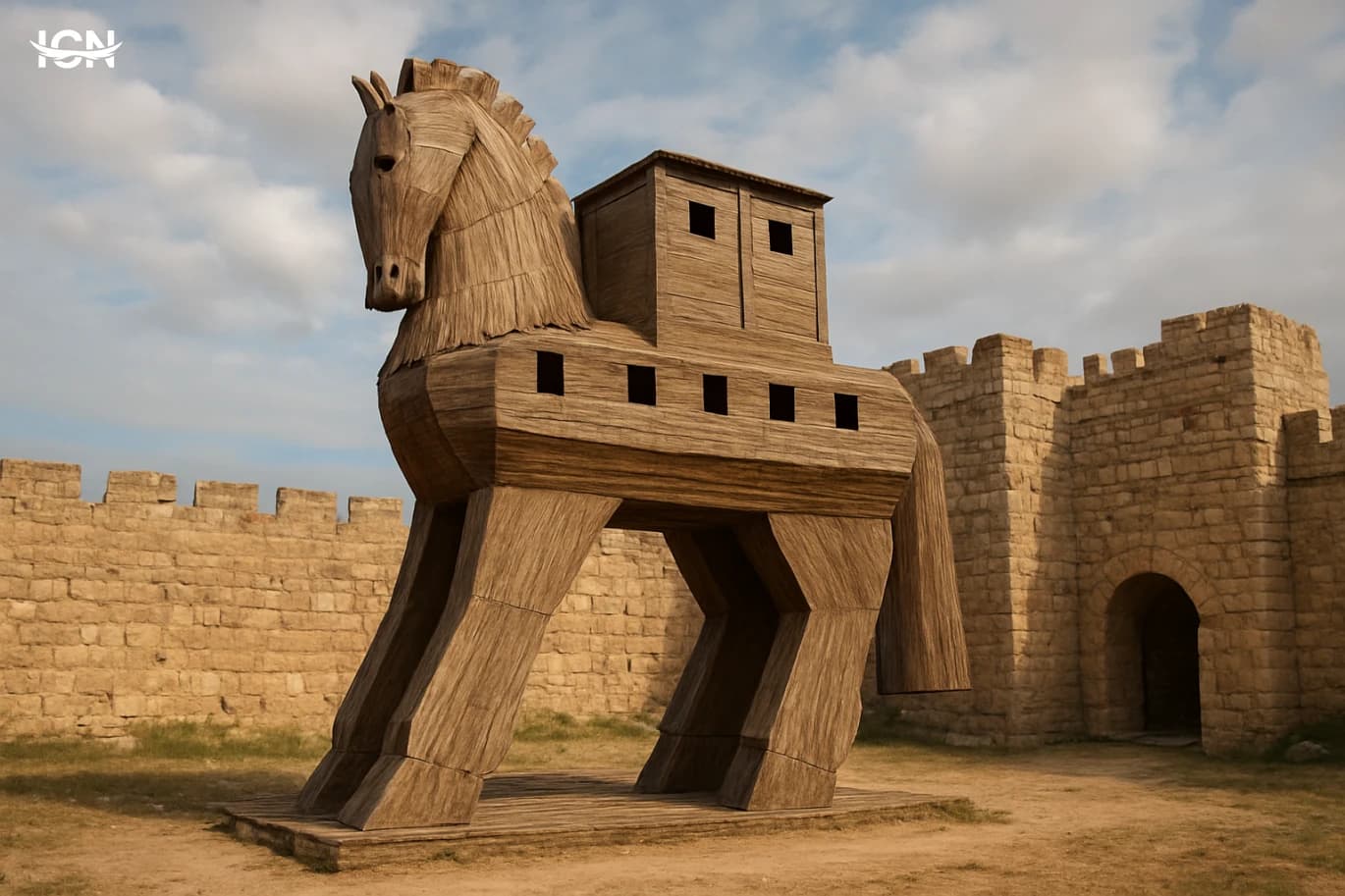
The Trojan Horse is one of the best-known episodes linked to the Trojan War, largely because it compresses a long conflict into a single, memorable act of deception. In later storytelling, the image is simple: a wooden horse left at the gates, warriors hidden inside, and a city undone by its own decision to bring the object in. Yet the fame of the story is not only about drama. It also reflects how ancient audiences understood strategy, persuasion, and the risks of misreading a rival’s intentions. The tale became a shorthand for a gift that is not a gift, a warning that still appears in modern language. Its popularity also comes from the way it sits at the intersection of myth and historical curiosity. People ask whether a real event could have inspired it, and if so, what that event looked like in practical terms. That question matters because the Trojan War itself occupies a complicated space: it is rooted in epic poetry and later literature, but it is also tied to a real place, Hisarlik in modern Turkey, where multiple layers of settlement show periods of destruction and rebuilding. The horse story, therefore, is not just a mythic flourish; it is a test case for how we separate narrative tradition from plausible historical scenarios.
Global Events Shaping Everyday Choices
Global events are often discussed as headlines, but their effects show up in routine decisions: what you pay for groceries, how long deliveries take, and which services are available in your city. The modern economy is built on tightly linked supply chains, financial networks, and data systems. When a disruption happens in one region—whether it is a major port slowdown, a sudden change in commodity output, or a new international standard—companies adjust prices, inventory, and staffing across multiple markets. Daily life is also shaped by how governments and businesses respond. Central banks react to inflation and currency swings, which influences loan rates and household budgets. Large manufacturers revise production plans, affecting job stability and product availability. Even local retailers depend on global logistics and digital payment infrastructure, so a problem far away can translate into fewer options on shelves or higher service fees. Understanding these links does not require tracking every headline. It helps to focus on a few channels through which global events typically affect households: prices and availability of essentials, energy and transportation costs, technology access and security, and public health and climate-related disruptions. These channels are where global shifts become personal and measurable.
How Ancient Flood Myths Shaped Real Cities
Flood myths show up in distant cultures that never met, from Mesopotamia and the Mediterranean to South Asia and the Americas. This section frames the blog’s core question: why did communities keep returning to the same narrative of water, loss, and rebuilding, and how did that narrative influence where people lived and how they organized their cities? It introduces the practical reasons floods mattered in early history—river valleys offered fertile soil, trade routes, and transport, but also seasonal danger. The section also sets a clear boundary between myth as a cultural record and myth as a literal report, explaining how historians and archaeologists treat these stories as evidence of memory, values, and environmental experience rather than as straightforward chronicles.
How Dragons Changed Across Civilizations
Dragons are one of the rare mythic figures that show up across continents, yet they rarely mean the same thing. In Europe, the dragon often becomes a test of courage, a threat to towns, or a symbol of chaos that must be defeated. In China, the dragon is more likely to represent authority, rainfall, and good fortune, appearing in court ritual, seasonal festivals, and art tied to the agricultural calendar. In parts of the Middle East, dragon-like beings appear in epic literature and folklore as powerful creatures linked to mountains, springs, or hidden knowledge. This wide distribution is not proof of a single origin; it is better explained by how different societies used a flexible creature to express local concerns: water and drought, kingship and legitimacy, borders and wilderness, or the dangers of greed. The topic becomes especially interesting when you look at how the same basic features—serpentine bodies, wings, horns, fire, or control of water—shift depending on environment and cultural exchange. Trade routes carried stories, motifs, and artistic conventions, while local storytellers adapted them to familiar landscapes. A coastal trading city might emphasize sea-serpents and storms, while inland communities might focus on caves, mountains, and livestock. By tracing these changes, you can see mythology working like a living archive: it records what people feared, valued, and negotiated in everyday life, even when the story is set in an imagined world.
The Real Story Behind the Trojan Horse
The Trojan Horse is often treated as a simple tale of clever deception, but it sits at the intersection of epic storytelling, archaeology, and how societies remember conflict. The story’s staying power comes from its usefulness: it explains a dramatic turning point, celebrates ingenuity, and offers a warning about trust and security. Yet the version most people know is not a single ancient “report.” It is a layered tradition shaped by poets, later historians, and modern retellings. This topic examines what ancient sources actually say, how the story evolved over time, and what material evidence can and cannot support. It also looks at why the horse became the dominant symbol rather than other episodes from the same cycle of legends. By separating the narrative functions of the myth from the historical questions around Late Bronze Age Troy, readers can better understand how famous myths are built, transmitted, and repurposed across centuries.
The Many Lives of the Library of Alexandria
This topic explores how Alexandria, founded by Alexander the Great and shaped by the Ptolemaic dynasty, became a deliberate experiment in building a city around scholarship. It explains the political and economic logic behind attracting poets, mathematicians, physicians, and translators to a Mediterranean port that connected Egypt to Greece, the Levant, and beyond. The section can cover the role of royal patronage, the city’s multicultural population, and the practical infrastructure that made large-scale collecting possible: shipping routes, markets for papyrus, and administrative systems that could fund long-term research. It also introduces the Mouseion as an institution that combined residence, stipends, and a scholarly community, setting the stage for why a library there was more than a storeroom of books. Readers get a clear sense of Alexandria as a planned hub where knowledge served prestige, governance, and cultural influence.
The Real Story of the Library of Alexandria
Alexandria rose quickly after its founding in 331 BCE because it sat at the intersection of Mediterranean shipping lanes and the Nile’s commercial routes. Under the early Ptolemaic rulers, the city was designed to attract scholars, translators, and administrators who could support a multilingual empire. The Library was not an isolated building but part of a larger research institution commonly linked to the Mouseion, where resident scholars received stipends, meals, and access to texts. This state-backed model mattered: it turned collecting and organizing knowledge into a public project tied to prestige, diplomacy, and governance. The city’s intellectual draw also came from its diversity. Greek, Egyptian, Jewish, and other communities lived and traded there, creating constant demand for translation and interpretation. That environment encouraged the compilation of reference works, commentaries, and standardized editions of older literature. The Library’s reputation grew because it offered something rare in the ancient world: a sustained, well-funded attempt to gather texts from many regions, compare versions, and preserve them for study. Understanding this context helps explain why later generations treated Alexandria as a symbol of learning, even when the historical details became blurred.
The Many Lives of the Phoenix Legend
The phoenix is one of the rare mythic creatures that appears across multiple civilizations without a single, fixed storyline. In modern culture it often means “rebirth,” but historically it carried more specific messages: cosmic order, royal legitimacy, and the promise of renewal after catastrophe. What makes the phoenix especially useful for historians of mythology is that it sits at the intersection of religion, state power, and natural observation. Ancient writers linked it to the sun’s cycle, to calendars, and to the idea that time itself can restart. That flexibility helped the legend travel, because each society could adapt the bird to its own needs while keeping the core image of a singular, extraordinary creature. This topic works best when treated as a case study in how myths migrate. Instead of asking whether the phoenix “really existed,” the more productive question is why communities kept retelling it. The answer often lies in institutions: temples that needed a sign of divine favor, rulers who wanted a story of renewal, and cities rebuilding after fires or earthquakes. By tracking where the phoenix appears in texts, art, and public rituals, we can see how a myth becomes a durable cultural tool rather than a simple folktale.
By clicking the SUBSCRIBE button, you are agreeing to our Privacy & Cookie Policy If you want to unsubsribe the marketing email, please proceed to our privacy center.
© 2005-2026 ICN. All Rights Reserved.