App Logo

Download Our App

Shop your way

logologo
Image

Bin Rabia clip

04/09/2025By: ICN
Bin Rabia clip

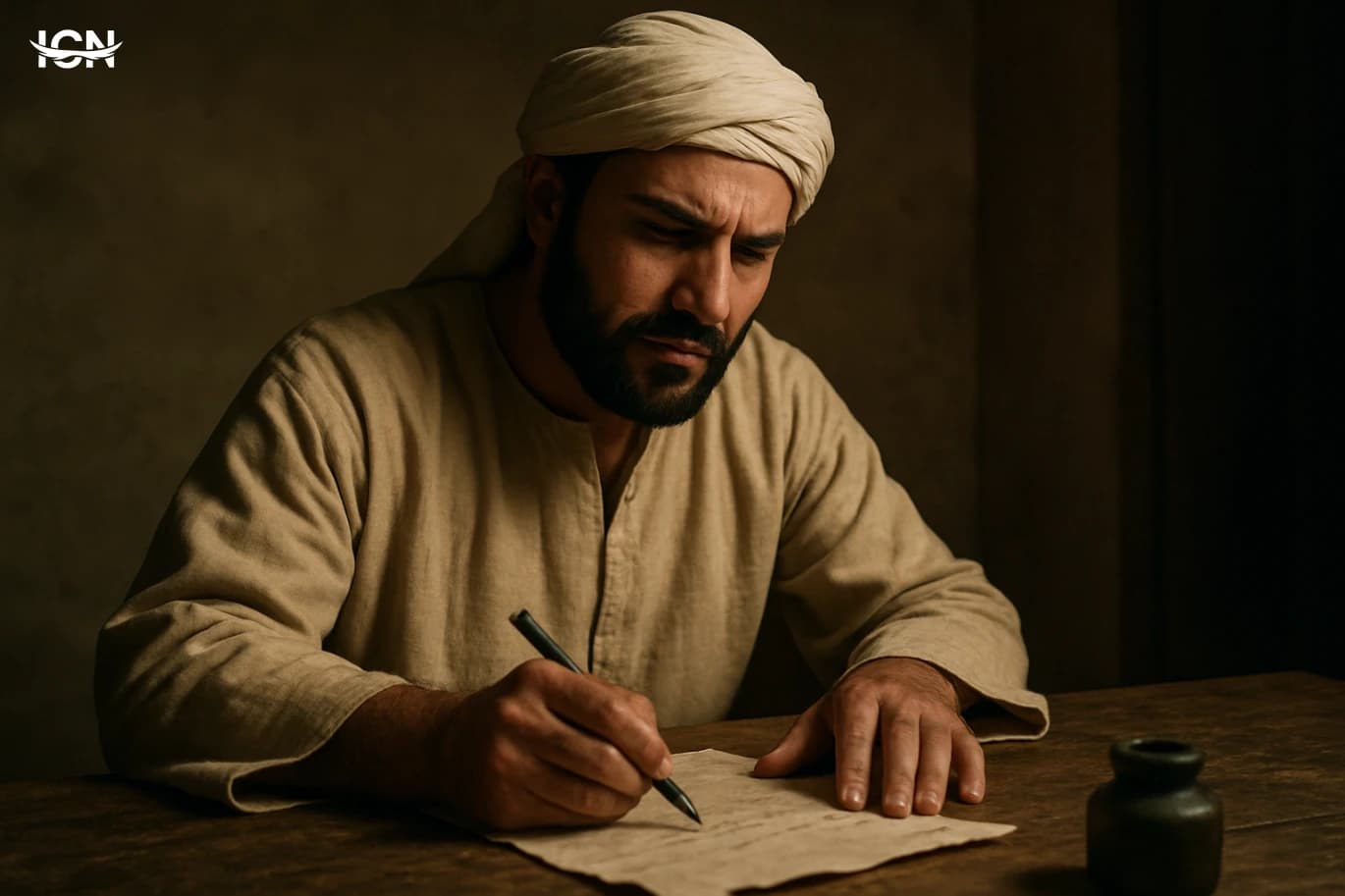
History of the life of Kulayb bin Rabia

The upbringing and education was the clip of Bin Rabia from the tribe of Thalb in Iraq, and it was born in a noble family, where it arose on the values ​​of courage and generosity. A clip was raised in an environment rich in authentic Arab traditions, which cultivated the love of hair and wisdom from a young age. Contributions and achievements made important contributions in the field of Arabic poetry and created in poems that talk about equestrian and women. His championships were famous for the tribal wars and contributed to the reunification of his people, in addition to being an influential figure in developing literary culture of his time. A clip is a symbol of courage and pride among the Arab tribes.

Bin Rabia's clip in the field of work

The role in society was a prominent role in his community, as it worked to strengthen unity between tribes and unify efforts to face challenges. Thanks to his wisdom and courage, he was able to be a mediator between the parties and seek peace in the crises. Impact and reflections left a clip a profound impact on the souls, as it inspired many through his heroic poems and exploits. He has always been an example to be followed in pride and courage, and his poems were considered a mirror that reflects the spirit of the age in which he lived. إن تأثيره لا يزال واضحاً في الأدب العربي حتى يومنا هذا.

The effect of Ben Rabia's clip on young people

The values ​​and principles he transmitted were the clip of Bin Rabiaa as a role model in adhering to noble values ​​such as courage, generosity and hypocrisy. Thanks to his poems, young people offered how pride and pride in heritage can have an important role in building personal identity. The factors that make him an example to follow. The clip of Bin Rabia derives his position from his compatibility with the principles of teamwork and the resolution of disputes by peaceful means, which makes him a role model. His poems inspire young people to take responsibility and contribute to their societies, which increases its positive impact across generations.

Opinions and assessments about the legacy of Kulaib bin Rabia

From experts and historians, experts believe that the legacy of Kulaib bin Rabia reflects the depth of Arab culture and its ancient history. They consider it a living example of literary power and its impact on society, as his poems formed part of the nation's collective memory. From the current generation of youth for the current generation, they look at the clip of Bin Rabia as a symbol of strength and inspiration. Many young people talk about the positive influence of their legacy in promoting noble values ​​such as pride and dignity, which makes them think about the importance of preserving cultural heritage in their lives.

Tips for followers and researchers about Kulayb bin Rabia

Related resources for more information can be interested in the legacy of Kulayb bin Rabia to view books specialized in ancient Arabic literature, in addition to academic articles dealing with his life and works, which gives them a deeper view of his influence in culture. Methods of influencing his legacy in daily life. People can inspire lessons from the poems of Kulaib Bin Rabia in their daily lives by enhancing the values ​​of courage and persistence. They can also use their cultural associations as a means of motivating others to explore Arab heritage and revive old stories that carry deep meanings.

* All articles published on this blog are sourced from various websites and are provided for informational purposes only. They should not be considered as confirmed studies or accurate information. Please verify the information independently before relying on it.

Similar ARTICLES

Leah and Quiet Courage: A Bedtime Story
Lea arrived at Al Noor Middle School on a Monday that felt ordinary to everyone except her. She was new to the city, new to the building, and new to the way the hallways seemed to have their own map that everyone else already knew. In the first assembly, the principal announced a schoolwide initiative called “The Community Project,” a semester-long program where students had to identify a practical problem on campus and propose a solution with measurable results. The rule that made Lea’s stomach tighten was simple: every student had to present at least once in front of a mixed-grade audience. The school had decided that communication skills were as important as grades, and the project would be assessed partly on clarity and public speaking. Lea was good at reading and careful writing, but speaking in front of people made her voice thin and her thoughts scatter. She wrote the rule in her notebook anyway, underlining it twice, because she had learned that ignoring a fear never made it smaller. By the end of the day, teachers were already forming teams. Lea was placed with three students she had just met: Hadi, who talked fast and liked big ideas; Mariam, who kept lists and asked precise questions; and Samer, who was quiet but observant. Their first task was to choose a problem worth solving. Lea listened more than she spoke, taking notes about what each person cared about, and trying to find a topic that could be approached with evidence rather than opinions.
A bedtime story: The ball that disappeared
In the coastal district of Al-Mina, the after-school routine was as predictable as the call of the street vendor who sold sesame bread at the corner. Children gathered in a narrow courtyard between two apartment blocks, where the pavement was patched with old cement and the goalposts were two chalk marks on a wall. The ball was not new, but it was reliable: a size-five with a faded logo and a seam that had been stitched twice by a local cobbler. It belonged to no single child, which made it feel like it belonged to everyone. Parents recognized it from balconies, and shopkeepers knew the sound of its bounce against the metal shutters. On a Thursday afternoon, the ball disappeared. There was no dramatic moment, no loud argument, no obvious culprit. One minute it was rolling near the water tap where kids refilled bottles; the next minute the courtyard was empty-handed, with players staring at each other as if the ground had swallowed their plans. The loss mattered because it interrupted more than a game. It disrupted a small system of shared rules: who plays first, who keeps score, who apologizes when a pass hits a window. In a neighborhood where space was limited and schedules were tight, the ball was a simple tool that organized time and attention. The children reacted like a newsroom without a lead. They listed facts, argued over timelines, and tried to remember the last person who touched it. A few insisted it must have rolled into the drainage channel; others said they saw it near the stairwell. The adults, hearing the commotion, offered quick theories and quick dismissals. Yet by evening, the courtyard was unusually quiet, and the missing ball became a shared question that everyone carried into the next day.
The monkey and the cunning banana: a story every day
In a small riverside town, the weekly market spilled into the edge of a mango-and-banana grove. Vendors laid out baskets of dates, clay cups, and bundles of herbs, while a fruit seller named Salim arranged banana hands on a low wooden table. The grove was close enough that birds and squirrels treated the market like an extension of their home. Salim knew this and kept a thin rope around the table legs, not to lock anything away, but to slow down quick paws. That morning, a young monkey watched from a branch above the stall. He was not the boldest in the troop, but he was the most observant. He had learned which customers dropped crumbs, which children chased him for fun, and which vendors threw pebbles to scare animals off. He also learned that Salim’s bananas were always the ripest, because Salim bought them early from farmers and kept them shaded. The monkey’s stomach was empty, and the smell of sweet fruit carried on the warm air. The monkey waited for the moment when Salim would turn to weigh oranges for a customer. He had done this before: jump, grab, and vanish into the grove. But today, something on the table caught his attention. Among the yellow bananas sat one that looked slightly different—its peel was smoother, its curve more pronounced, and it seemed to sit apart as if it had been placed with care. The monkey’s eyes fixed on it, and he began to plan, not knowing that the banana itself would become the cleverest character in the story.
The Bear and the Brave Bee
In a wide cedar forest, every creature had learned a practical rule: keep your distance from what you do not understand. The bear, known for his strength and appetite, followed that rule only when it suited him. He was not a villain in the way stories sometimes simplify; he was simply used to getting what he wanted. When berries were plentiful, he ignored the beehives. When the season turned and food became scarce, he began to look at the hives as if they were stored jars on a shelf. The bees lived in a hollow oak near a stream. Their work was organized, their movements precise, and their purpose clear: gather nectar, protect the queen, store honey for winter. They did not seek conflict with the larger animals. Their safety came from coordination and from the warning that a hive could deliver when threatened. Still, the forest had been changing. A storm had knocked down several flowering shrubs, and fewer blossoms meant less nectar. The bees were already under pressure when the bear started visiting the oak more often, sniffing and circling as if measuring the easiest way to break in.
Strawberry and Bee in the City Garden
Mira lived in an apartment where the only outdoor space was a narrow balcony facing a busy street. She wanted a small garden that produced something real, not just decorative leaves. After reading local planting calendars and speaking with a neighborhood nursery, she chose strawberries because they could grow in containers and because the fruit would be easy to notice and harvest. She bought three young strawberry plants, a bag of compost, and a rectangular planter with drainage holes. She also learned one detail that changed how she thought about the project: strawberries can produce better fruit when pollination is reliable. The nursery owner explained that wind helps a little, but insects often do the precise work that turns flowers into evenly shaped berries. Mira wrote a simple plan on a note taped to the balcony door: keep the soil consistently moist, avoid spraying anything harsh, and make the balcony welcoming to pollinators. She added a shallow dish with pebbles and water so small insects could drink without drowning. On the first warm morning of the season, the plants opened their first white blossoms. Mira noticed how small the flowers were compared with the attention they required. Each bloom had a yellow center packed with tiny structures that needed contact to set fruit properly. She leaned close, curious, and then stepped back to give the flowers space. The balcony garden was ready, but it still needed a visitor who understood the job.
Barqash and the Cost of a Warning
The Arabic proverb “On herself Barqash brought it” is used when someone causes their own misfortune through a decision that backfires. In everyday speech it can describe a person who reveals a secret, insists on a risky plan, or tries to show off and ends up paying the price. The phrase is short, memorable, and often delivered as a final verdict after events unfold. What keeps it alive is that it does not require a long explanation. It points to a recognizable pattern: an action meant to protect, impress, or gain advantage ends up exposing the person to harm. In media writing and casual conversation, it functions as a compact narrative, implying that the outcome was avoidable and that the responsibility sits with the person who triggered it. The proverb is also tied to a story that readers remember as if it were a scene from a folktale. Whether the details are historically precise matters less than the moral structure: a warning signal that should have served a community becomes the reason the community is discovered. That story centers on a figure named Barqash, and versions differ on whether Barqash was a dog or a woman, but the lesson remains consistent.
The Little Forest Keeper: A Bedtime Story
In the heart of the bustling city, where concrete towers rise and the streets are choked with cars, 10-year-old Sami always felt like something was missing. He constantly wondered about the grayness that blanketed his city's sky and why he felt so tired whenever he spent too much time outdoors. The answer came on a school trip to the Rainforest Reserve, a protected natural area on the outskirts of the city, considered the lungs of the region. The trip aimed to teach the students about the importance of ecological balance. Upon arrival, the sight was breathtaking: towering trees reaching for the sky, the fresh air filling their lungs with a refreshing coolness, and the sounds of birdsong filling the air. The environmental expert who had accompanied them on the tour greeted them and began explaining how the forest functions. "Do you feel the difference here?" the expert asked the students. "The air is different here, isn't it? Do you know why?" Sami raised his hand and exclaimed enthusiastically, "Because it's full of trees! Trees create the air!"
Samsoum and the Quiet Map
Samsoum is a small, curious character who lives in a tidy home where evenings are calm and predictable. Tonight, however, Samsoum feels a little restless, the kind of restlessness that makes pillows feel too warm and blankets too light. Instead of forcing sleep, Samsoum decides to do something simple and safe: prepare a “quiet plan” for the night. The plan has three steps—drink a little water, put one toy back on the shelf, and choose a story. This is not about being perfect; it is about giving the mind a clear path to follow. The bedtime story begins with that idea: a gentle routine can turn a busy day into a calm night. Samsoum’s world is not filled with big problems or loud events. It is filled with small choices, familiar objects, and the comfort of knowing what comes next. That is why this story works well before sleep. It keeps the pace slow, uses clear details, and gives children a sense of control. The goal is not excitement; the goal is a soft landing into rest, one step at a time.
The story of the unknown companion before bedtime
"The Unknown Companion" is one of the most famous stories in the Green Library, inspired by world literature. It tells the tale of Amin, a young man who becomes an orphan, sells his possessions, and embarks on a journey. Along the way, he meets a mysterious companion who courageously and wisely helps him overcome perilous adventures, most notably solving the riddles of a princess and marrying her. It is eventually revealed that this companion was the benevolent spirit of his father, who had cared for him. Summary of Events: The story begins with the death of Amin's father when he is sixteen years old, leaving him a final will. The young man decides to sell his house and leave the city to seek his future. On his journey, he meets a stranger who offers to travel with him as friends. The pair embark on wondrous adventures, the most significant of which occurs when they arrive in a kingdom ruled by a highly intelligent princess. She stipulates that marriage is only possible for the one who solves the three riddles she poses, and she executes all who fail. Thanks to the wisdom and unseen assistance of the unknown companion, Amin succeeds in answering the riddles and wins the princess's heart.
The Quiet Power of Unreliable Diaries
Diary-based fiction feels intimate because it borrows the format of private record-keeping, but it also changes how readers judge truth. A diary entry is dated, selective, and written for a specific moment, which means it naturally contains gaps, revisions, and self-justifications. In novels and short stories, that structure lets writers compress time, jump between days or years, and show how a narrator’s priorities shift without needing heavy exposition. It also creates a built-in tension: the reader is invited to trust the “document,” while the story quietly signals that the document is incomplete. This topic becomes especially engaging when the diary is unreliable on purpose. Unreliability is not only about lying; it can come from limited knowledge, emotional bias, memory distortion, or a narrator who edits their own past to protect their self-image. In diary fiction, those mechanisms are easy to dramatize because the narrator is actively choosing what to write down and what to omit. The result is a reading experience where interpretation matters: readers assemble the “real” story from what is written, what is avoided, and what contradicts earlier entries.
By clicking the SUBSCRIBE button, you are agreeing to our Privacy & Cookie Policy If you want to unsubsribe the marketing email, please proceed to our privacy center.
© 2005-2026 ICN. All Rights Reserved.