App Logo

Download Our App

Shop your way

logologo
Image

Al -Yaqoub Oasis novel

03/12/2025By: ICN
Al -Yaqoub Oasis novel

introduction

About the writer wrote the famous writer, who is known for his unique style and his ability to tell stories. His writings are characterized by the depth of interesting characters and events that capture the reader since the first pages. He had an innate talent to express human feelings and challenges facing individuals in their daily lives. The date of the publication of the novel was published in 2020, and witnessed a great demand from both readers and critics. She won many literary awards and encouraged many readers to interact with her subjects and innovative ideas. It is a novel that leaves a clear imprint in the world of modern literature and bold reflections about society.

Personal analysis

The main characters The novel includes a group of diverse characters that embody different issues of society. The dialogue revolves around the main character, which is a symbol of internal conflict and personal challenges. In addition, there are secondary characters that enhance the understanding of the general context of the novel and add another dimension to the events. The development of characters develops the characters through the course of the novel, as they are subject to experiences and transformations that reflect human complexity. The writer deals with how the characters are affected by the surrounding environment, which reflects the factors of success and failure that accompany their pursuit of their dreams. This dynamic contributes to making characters closer to the reader and increases his interconnection with events.

Story review

The main events The novel deals with a group of interlocking events that reflect the internal conflicts of characters. Where the story begins with a pivotal position that reflects the challenges facing the main character, which leads it to make fateful decisions. Events continue to form a sudden path, affecting all other characters and playing a decisive role in the development of the story. The development of the plot develops the plot elaborately, as the different elements overlap and lead to an escalation of tension. During these developments, the reader reveals new details that reveal the motives and challenges of the characters. The escalation of events contributes to the creation of a dramatic peak that reflects the development of conflicts and establishes influencing surprises in the end, which keeps the reader in a continuous anticipation.

Message and topics

The main message The novel deals with a deep message related to steadfastness and change. The main character shows how individuals can go beyond obstacles through self -believing and the ability to adapt to difficult conditions. Sub -topics deal with multiple topics such as friendship, loss, and identity search. Friendships that are formed in times of crisis appear, as they reflect the effect of loss on characters and how the pain can turn into strength. In addition, the novel provides perceptions about identity and the diversity of human experiences, which attracts the reader to think about his private life.

The novel evaluation

Literary criticism received different reviews from critics. Some of them praised the deep narrative style and poetic language, noting how to embody complex feelings through the characters. Others considered that some situations were excessively emotional, which affected the credibility of the story. Reactions from readers despite mixed opinions from critics, the novel achieved great popularity among readers. Many readers found themselves enjoying dramatic events and developments, which made them link the main personality experience and their personal experiences. This response makes the novel a permanent effect on the souls of those who read it.

* All articles published on this blog are sourced from various websites and are provided for informational purposes only. They should not be considered as confirmed studies or accurate information. Please verify the information independently before relying on it.

Similar ARTICLES

The Bear and the Brave Bee
In a wide cedar forest, every creature had learned a practical rule: keep your distance from what you do not understand. The bear, known for his strength and appetite, followed that rule only when it suited him. He was not a villain in the way stories sometimes simplify; he was simply used to getting what he wanted. When berries were plentiful, he ignored the beehives. When the season turned and food became scarce, he began to look at the hives as if they were stored jars on a shelf. The bees lived in a hollow oak near a stream. Their work was organized, their movements precise, and their purpose clear: gather nectar, protect the queen, store honey for winter. They did not seek conflict with the larger animals. Their safety came from coordination and from the warning that a hive could deliver when threatened. Still, the forest had been changing. A storm had knocked down several flowering shrubs, and fewer blossoms meant less nectar. The bees were already under pressure when the bear started visiting the oak more often, sniffing and circling as if measuring the easiest way to break in.
Strawberry and Bee in the City Garden
Mira lived in an apartment where the only outdoor space was a narrow balcony facing a busy street. She wanted a small garden that produced something real, not just decorative leaves. After reading local planting calendars and speaking with a neighborhood nursery, she chose strawberries because they could grow in containers and because the fruit would be easy to notice and harvest. She bought three young strawberry plants, a bag of compost, and a rectangular planter with drainage holes. She also learned one detail that changed how she thought about the project: strawberries can produce better fruit when pollination is reliable. The nursery owner explained that wind helps a little, but insects often do the precise work that turns flowers into evenly shaped berries. Mira wrote a simple plan on a note taped to the balcony door: keep the soil consistently moist, avoid spraying anything harsh, and make the balcony welcoming to pollinators. She added a shallow dish with pebbles and water so small insects could drink without drowning. On the first warm morning of the season, the plants opened their first white blossoms. Mira noticed how small the flowers were compared with the attention they required. Each bloom had a yellow center packed with tiny structures that needed contact to set fruit properly. She leaned close, curious, and then stepped back to give the flowers space. The balcony garden was ready, but it still needed a visitor who understood the job.
Barqash and the Cost of a Warning
The Arabic proverb “On herself Barqash brought it” is used when someone causes their own misfortune through a decision that backfires. In everyday speech it can describe a person who reveals a secret, insists on a risky plan, or tries to show off and ends up paying the price. The phrase is short, memorable, and often delivered as a final verdict after events unfold. What keeps it alive is that it does not require a long explanation. It points to a recognizable pattern: an action meant to protect, impress, or gain advantage ends up exposing the person to harm. In media writing and casual conversation, it functions as a compact narrative, implying that the outcome was avoidable and that the responsibility sits with the person who triggered it. The proverb is also tied to a story that readers remember as if it were a scene from a folktale. Whether the details are historically precise matters less than the moral structure: a warning signal that should have served a community becomes the reason the community is discovered. That story centers on a figure named Barqash, and versions differ on whether Barqash was a dog or a woman, but the lesson remains consistent.
The Little Forest Keeper: A Bedtime Story
In the heart of the bustling city, where concrete towers rise and the streets are choked with cars, 10-year-old Sami always felt like something was missing. He constantly wondered about the grayness that blanketed his city's sky and why he felt so tired whenever he spent too much time outdoors. The answer came on a school trip to the Rainforest Reserve, a protected natural area on the outskirts of the city, considered the lungs of the region. The trip aimed to teach the students about the importance of ecological balance. Upon arrival, the sight was breathtaking: towering trees reaching for the sky, the fresh air filling their lungs with a refreshing coolness, and the sounds of birdsong filling the air. The environmental expert who had accompanied them on the tour greeted them and began explaining how the forest functions. "Do you feel the difference here?" the expert asked the students. "The air is different here, isn't it? Do you know why?" Sami raised his hand and exclaimed enthusiastically, "Because it's full of trees! Trees create the air!"
Samsoum and the Quiet Map
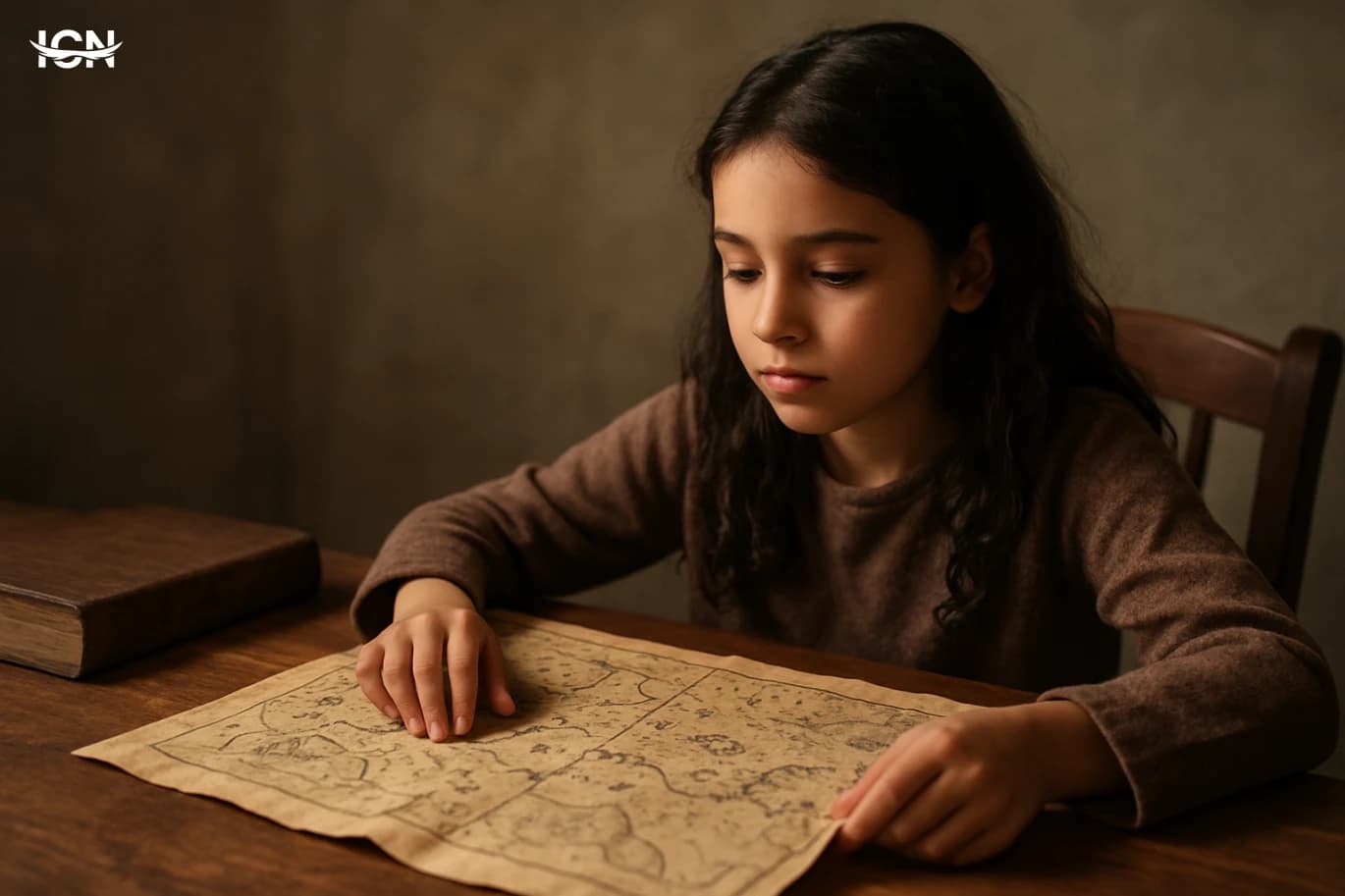
Samsoum is a small, curious character who lives in a tidy home where evenings are calm and predictable. Tonight, however, Samsoum feels a little restless, the kind of restlessness that makes pillows feel too warm and blankets too light. Instead of forcing sleep, Samsoum decides to do something simple and safe: prepare a “quiet plan” for the night. The plan has three steps—drink a little water, put one toy back on the shelf, and choose a story. This is not about being perfect; it is about giving the mind a clear path to follow. The bedtime story begins with that idea: a gentle routine can turn a busy day into a calm night. Samsoum’s world is not filled with big problems or loud events. It is filled with small choices, familiar objects, and the comfort of knowing what comes next. That is why this story works well before sleep. It keeps the pace slow, uses clear details, and gives children a sense of control. The goal is not excitement; the goal is a soft landing into rest, one step at a time.
The story of the unknown companion before bedtime
"The Unknown Companion" is one of the most famous stories in the Green Library, inspired by world literature. It tells the tale of Amin, a young man who becomes an orphan, sells his possessions, and embarks on a journey. Along the way, he meets a mysterious companion who courageously and wisely helps him overcome perilous adventures, most notably solving the riddles of a princess and marrying her. It is eventually revealed that this companion was the benevolent spirit of his father, who had cared for him. Summary of Events: The story begins with the death of Amin's father when he is sixteen years old, leaving him a final will. The young man decides to sell his house and leave the city to seek his future. On his journey, he meets a stranger who offers to travel with him as friends. The pair embark on wondrous adventures, the most significant of which occurs when they arrive in a kingdom ruled by a highly intelligent princess. She stipulates that marriage is only possible for the one who solves the three riddles she poses, and she executes all who fail. Thanks to the wisdom and unseen assistance of the unknown companion, Amin succeeds in answering the riddles and wins the princess's heart.
The Quiet Power of Unreliable Diaries
Diary-based fiction feels intimate because it borrows the format of private record-keeping, but it also changes how readers judge truth. A diary entry is dated, selective, and written for a specific moment, which means it naturally contains gaps, revisions, and self-justifications. In novels and short stories, that structure lets writers compress time, jump between days or years, and show how a narrator’s priorities shift without needing heavy exposition. It also creates a built-in tension: the reader is invited to trust the “document,” while the story quietly signals that the document is incomplete. This topic becomes especially engaging when the diary is unreliable on purpose. Unreliability is not only about lying; it can come from limited knowledge, emotional bias, memory distortion, or a narrator who edits their own past to protect their self-image. In diary fiction, those mechanisms are easy to dramatize because the narrator is actively choosing what to write down and what to omit. The result is a reading experience where interpretation matters: readers assemble the “real” story from what is written, what is avoided, and what contradicts earlier entries.
Hedgehog Neighbors at Moonlit Meadow
In a small meadow at the edge of a pine grove, the evening routine always began the same way. The sun slipped behind the trees, the air cooled, and the ground held the day’s warmth like a soft blanket. Under a low bush of wild thyme lived Hadi the hedgehog. He was small, careful, and proud of how well he kept his home: a tidy nest of dry leaves, a smooth pebble by the entrance, and a narrow path he cleared with his paws. That night, Hadi stepped outside to check the meadow. He listened for the steady sounds that meant everything was normal: the gentle rustle of grass, the distant hoot of an owl far above, and the quiet tapping of beetles moving under fallen bark. Hadi’s neighbors were all small animals, each with their own habits. Mina the field mouse stored seeds in a hollow log. Sami the rabbit liked to trim clover near the creek. Lina the squirrel kept pinecones in a forked branch. And Nabil the tortoise moved slowly between patches of shade, always arriving later than everyone else. Hadi liked order, and he liked knowing what to expect. But the meadow had a way of offering small surprises, the kind that made an ordinary evening feel like a story worth remembering before sleep.
The Woodcutter and the Lake Warden
In a valley known for its cedar slopes and a single freshwater lake, the community depended on two resources that rarely agreed with each other: timber from the hills and water from the basin. The lake fed irrigation channels, cooled the air in summer, and supplied drinking water to nearby homes. The forest, meanwhile, provided firewood, beams for roofs, and seasonal work for men who knew how to cut without wasting. To reduce disputes, the council appointed a lake warden with clear duties: keep the shoreline clean, prevent dumping, and monitor the small inlet stream that carried silt after storms. The warden, named Salim, was not a soldier and carried no weapon; his authority came from records, schedules, and the trust of farmers who needed stable water levels. He kept a notebook of daily observations, marked the height of the water on a stone gauge, and reported any unusual changes. On the other side of the valley worked a woodcutter named Nabil. He was skilled, careful with his tools, and known for choosing trees that were already leaning or crowded, leaving younger growth to recover. Yet the work was unpredictable. A late frost could ruin a season, and a broken axle on a cart could turn a week’s earnings into debt. Nabil’s problem was not laziness or greed; it was the pressure of providing for his household when the market price for wood dropped. The story begins when the lake’s surface fell faster than usual at the end of spring. Farmers blamed the forest work, saying the hills were being stripped and the soil no longer held water. Woodcutters blamed the farmers, saying irrigation gates were left open and channels leaked. Salim, the warden, had to find facts before the valley turned its arguments into permanent divisions.
By clicking the SUBSCRIBE button, you are agreeing to our Privacy & Cookie Policy If you want to unsubsribe the marketing email, please proceed to our privacy center.
© 2005-2026 ICN. All Rights Reserved.